Calibration intake planning
Teams receive a defined intake path that separates daily-use gauges, audit reference sets, damaged tools, and items needing range confirmation before they enter the same queue.

Service evidence
Service contracts that read like operating manuals, not sales kits. Starrett starts each service conversation by identifying the measurement range, the part feature being protected, the required uncertainty statement, and the approval region that will be challenged during the next audit. That sequence gives quality managers a usable path instead of a vague promise.
For dimensional metrology programs, the hard work is usually between the tool and the record. A caliper may be easy to purchase, while a fleet of calipers with mixed ranges, multiple plants, different operators, and drifting calibration intervals can become difficult to defend. Starrett service support is organized to make those relationships visible before a failure, nonconformance, or line hold forces a rushed decision.

Service overview
Teams receive a defined intake path that separates daily-use gauges, audit reference sets, damaged tools, and items needing range confirmation before they enter the same queue.
Reports are framed around the reading condition, method, and record format that quality leaders need when a customer asks how the measurement was controlled.
Damaged or worn instruments are reviewed against inspection risk, not only replacement price, so teams can decide whether repair, replacement, or quarantine is appropriate.
Operators, technicians, and supervisors align around practical handling checks, reading discipline, and record habits that help reduce variation between shifts and sites.
Case highlight
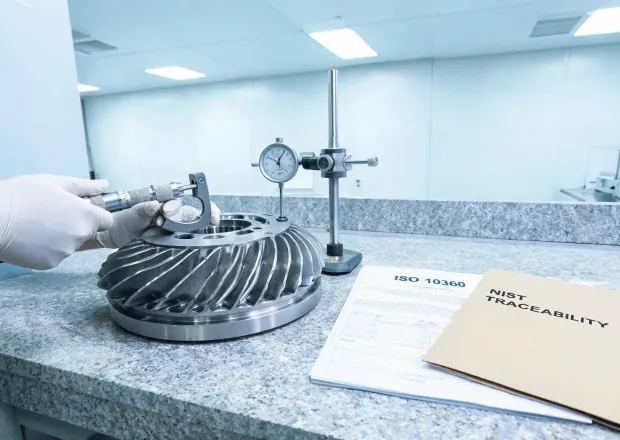
An aerospace machining team needed a faster way to separate fixture issues from instrument issues after several blade features moved close to their tolerance limits. Starrett organized the review around master standards, dial indicator behavior, micrometer range, and the evidence pack required by the customer. The output was not a generic service note. It was a controlled list of gauges, intervals, and decision points that could be read by manufacturing engineering and quality leadership without translation.
The plant kept the focus on the measurement chain. Operators could see which instruments were cleared for release checks, which required repair, and which should be replaced before the next production cell audit. That clarity reduced unnecessary escalation because the team had a shared record of what each reading could support.
Case highlight
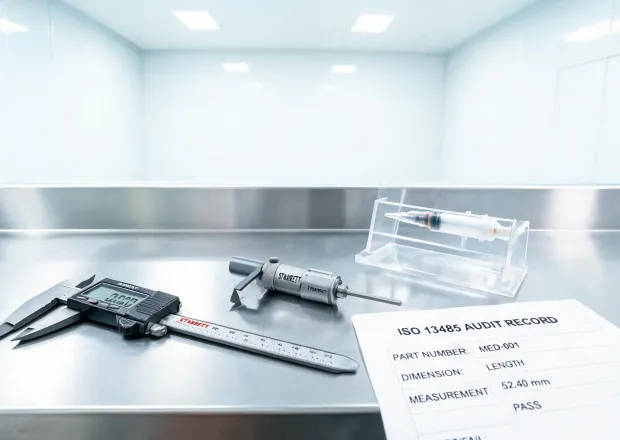
A medical device supplier had a large group of calipers, depth micrometers, and comparator fixtures spread across incoming inspection and final verification. The service review established a tighter intake plan, linked each gauge family to the device feature it protected, and assigned evidence requirements before tools were returned to the floor. The result gave the quality team a defensible record without forcing production to wait for a full system redesign.
When auditors asked how disposable-device dimensions were controlled, the team could point to calibration scope, tool assignment, and handling expectations in one place. That is the kind of service artifact Starrett is built to support.
Start with the record
Starrett can review the instrument family, calibration evidence, and service route together. That keeps the request connected to the way the tool will be used on the floor, in the inspection room, and during customer review.