
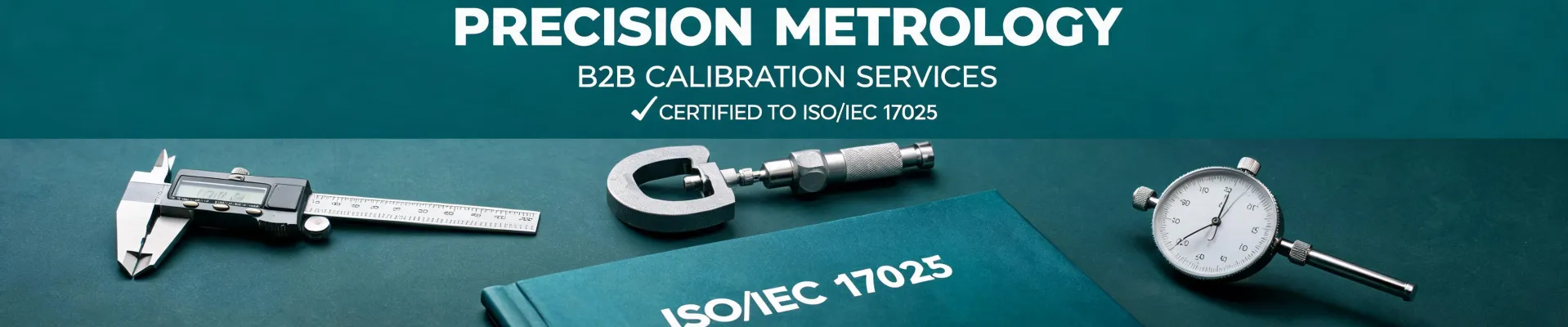
Look, I'm not going to pretend there's one perfect Starrett tool for everyone. I've made that mistake—literally. In 2017, my first year as a quality technician, I ordered 30 pairs of the same digital calipers for our entire machine shop. Figured 'one size fits all' was efficient. Six months later, half of them were collecting dust in a drawer while the guys on the floor were sneaking in their own Mitutoyos. That $2,400 order taught me a lesson: the right tool depends entirely on what you're measuring, where you're measuring, and who's measuring.
Three Scenarios, Three Different Answers
After getting burned twice—once on a rush order where the wrong micrometer cost us a $3,200 rework, and once on a communication failure where 'standard accuracy' meant different things to me and the supplier—I developed a simple framework. It breaks down into three distinct use cases. If your situation fits one of these, the recommendation becomes much clearer.
Scenario A: Production Floor Inspection (Speed & Reliability)
If you're on a manufacturing line measuring hundreds of parts per shift, you need tools that are fast, read reliably in less-than-clean conditions, and survive occasional drops. This is where Starrett digital calipers shine—specifically the 799 series. They have a sealed electronic package that resists coolant splashes, and the large LCD digits mean operators don't squint.
I once recommended a cheaper non-Starrett caliper for a production line. The first week, three units failed due to coolant ingress. The line supervisor literally threw one at my desk. That's when I learned to never compromise on environmental resistance for production tools. The premium for a Starrett 799 (roughly $150–180 vs $60–100 for generic) buys you two things: IP54 protection and a warranty that actually gets honored. On a line that runs 16 hours a day, that's a no-brainer.
For micrometers in production, go with the 2100 series—satin chrome finish, friction thimble, and a carbide face that lasts years. Budget: $200–280. Avoid digital micrometers here unless you're okay with battery changes every 6 months.
Scenario B: Laboratory & Calibration (Maximum Accuracy & Traceability)
Now, if you're inspecting precision components for aerospace or medical devices—or if you're maintaining a calibration lab—speed takes a backseat to accuracy and documentation. This is the territory where Starrett's 289 True RMS Multimeter actually makes sense? Wait—no, I'm mixing things up. The multimeter is a different brand. What I mean is, for dimensional measurements in a lab, you want the highest resolution and repeatability you can get.
Starrett's 216 series micrometers with ratchet stop and carbide faces provide 0.0001" resolution. But honestly, after calibrating instruments for five years, I've found that the human factor causes more error than the tool. The single biggest mistake I made: assuming a brand-new Starrett indicator was 'close enough' out of the box. It wasn't. Per ISO 17025, any tool used for acceptance testing needs a calibration certificate within 12 months. I learned that the hard way when a customer rejected a $15,000 batch because our mic was 0.0002" off.
For labs, my recommendation: Starrett dial indicators (the 655 series) paired with a digital depth micrometer. The analog dial gives you instant trend visibility, and the digital mic provides the readout for records. Budget $400–600 for the combo. And always budget for calibration—about $75–150 per tool annually.
Scenario C: Field Service & Mobile Repair (Durability & Portability)
Third scenario: you're climbing into a press, working on an assembly line in a dusty warehouse, or checking tolerances on a crane. Here, the #1 killer of precision tools is shock and contamination. I've dropped a $250 Starrett dial indicator from 3 feet onto concrete. Surprisingly, it survived—but the cheap carbon-fiber calipers I had? Cracked in half.
For field use, I now only specify Starrett's IP67-rated digital calipers (the 799 series with data output). They're waterproof, dustproof, and the battery lasts over a year. Also, a depth micrometer with a lock nut—because in awkward positions, you can't always read the scale immediately. I once measured a depth on a hydraulic cylinder, then forgot to lock it. The reading shifted by 0.015" when I brought it back to the light. That error caused a 3-day production delay and $890 in redo. Now I have a personal rule: if the tool leaves the bench, it must have a locking mechanism.
How to Know Which Scenario You're In
Here's my cheat sheet. Ask yourself three questions:
- How dirty is the environment? Coolant, dust, oil? If yes, go Scenario A or C (avoid non-sealed tools).
- How often do you need documented readings? Daily? You need digital with data output. Weekly? Analog might be fine.
- What's the cost of a wrong measurement? If a single error can halt production or scrap a part worth >$500, invest in lab-grade tools (Scenario B).
I've personally made about 12 significant measurement mistakes (I document them now—it's a weird habit). The total waste is roughly $7,400 in rework, lost material, and rushed replacements. Every one of those could have been avoided if I'd matched the tool to the scenario upfront.
One More Thing: Don't Overlook the 'People Factor'
I said 'standard accuracy' to the procurement team back in 2019. They heard 'cheapest option.' We ended up with tools that were technically within spec but didn't have the ergonomic features our operators needed. Result: complaints, low usage, and eventually a separate purchase. The lesson: when you're choosing between a Starrett and a budget alternative for a team of 10, the $1,000–2,000 savings is quickly eaten up by productivity losses and duplicate purchases.
My experience is based on about 150 measurement tool orders over a decade—mostly in medium-sized machine shops and contract manufacturing. If you're in ultra-precision optics or semiconductor fab, your accuracy requirements might be a different league. But for 90% of general manufacturing and repair work, these three buckets will steer you right.
Between you and me, I still get nervous when someone asks for a 'universal' recommendation. There's no such thing. But if you nail down your scenario—production floor, lab, or field—you're 80% of the way to the right Starrett tool. The last 20% is budget, calibration schedule, and whether your operators actually like using it.

Jane Smith
I’m Jane Smith, a senior content writer with over 15 years of experience in the packaging and printing industry. I specialize in writing about the latest trends, technologies, and best practices in packaging design, sustainability, and printing techniques. My goal is to help businesses understand complex printing processes and design solutions that enhance both product packaging and brand visibility.
Leave a Reply