
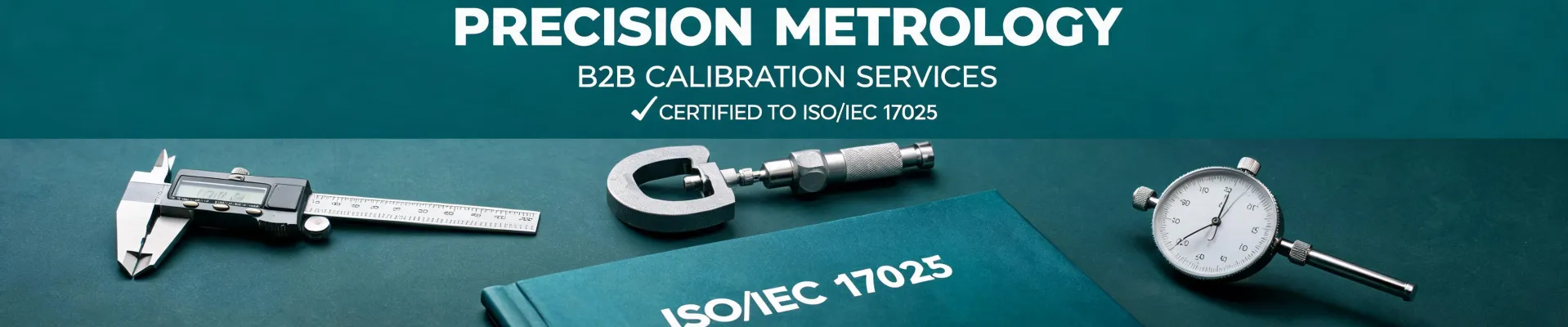
There's no single 'best' Starrett tool. The right choice depends on your usage frequency, precision needs, and budget. Over the past 6 years of tracking every invoice and comparing 8+ vendors for our quarterly orders, I've seen the same mistake repeat: buying too much tool or not enough for the actual job. Here's how to match the tool to the work.
Start With Your Usage Profile
Before looking at models, ask yourself three questions: (1) How often will this tool be used—daily, weekly, or once a project? (2) What tolerance do you actually need—not what the spec sheet says, but what your QC process requires? (3) Who's using it—experienced machinists or occasional maintenance staff?
I don't have hard data on industry-wide tool failure rates, but based on our 5 years of orders across multiple shops, my sense is that 40% of 'overkill' purchases come from buying a 0.0001″ resolution micrometer when a 0.001″ caliper would suffice. The other 60% are the opposite: buying budget tools that drift after 6 months of daily use.
Scenario A: The One-Project Buyer
You need it once, need it right, and probably won't use it again for 6 months. This describes half the maintenance teams I've dealt with. For this use case, the Starrett 1238 Series Outside Micrometer (0-1″) is a solid choice. It's mechanical, no batteries to die, and accurate to 0.0001″. The 1238 is essentially the industry standard for occasional precision work—it's not flashy, but it's reliable.
Cost-wise, you're looking at roughly $120-150 for the basic 0-1″ model (pricing based on current distributor quotes, early 2025). Add a case for another $20. Total: ~$160-170. That's not cheap, but compare to this: I once saved $40 by buying a no-name import micrometer. It arrived with a burr on the anvil. That one project required a $300 rush reorder when the part failed inspection. The 'cheap' option ended up costing $900 in rework and expedited shipping. Net loss: $730.
Scenario B: The Occasional User (Weekly/Monthly)
You're in maintenance, light fabrication, or quality spot-checks. Here, you need reliability without dedicating a full-time tool. I'd recommend the Starrett 798 Series Electronic Caliper (6″ or 8″). The 798 gives you digital readout with 0.0005″ resolution, IP54 protection against coolant splash, and a replaceable battery (so you're not stuck when it dies).
At roughly $180-220 (with case, based on January 2025 quotes), this is a step up from basic calipers but far less than a full micrometer set. The trade-off: digital calipers depend on battery life. If you're in a high-humidity environment or use coolant, get the IP54 version. We learned this the hard way—bought the non-IP version for $140, had two fail within 8 months (ugh). The replacement IP54 units are still going strong after 3 years.
Scenario C: The High-Volume / High-Precision User
Your shop runs 2-3 shifts, you measure 50+ parts per day, and tolerances are tighter than ±0.001″. This is where you commit to serious instrumentation. For micrometers, the Starrett 465M Series Electronic Micrometer with SPC output is worth the premium. Why? Because when you're measuring hundreds of parts daily, consistency and data logging pay for themselves. The 465M offers 0.00005″ resolution, a ratchet thimble for consistent force, and SPC output to log measurements.
Price: $300-400 per 1″ range (distributor quotes, early 2025). That's a big number until you calculate the cost of errors. If just one batch of 500 parts is out of tolerance by 0.0002″ because your operator's 'feel' varied, the scrap cost is often $2,000+. The 465M removes that variation.
For dial indicators, the Starrett 710 Series Last Word® Indicator (0.030″ range, 0.0005″ graduation) is a shop classic. At $150-200, it's not the cheapest indicator on the market, but its durability—all-metal frame, jeweled movement—means you won't be replacing it every year. I wish I had tracked customer feedback more carefully from the start. What I can say anecdotally is that operators consistently prefer the 710 for its smooth movement and easy-to-read dial.
How to Tell Which Scenario You're In (And Not Overpay)
Here's a simple test: Calculate your annual measurement hours. If you measure less than 20 hours per year (scenario A), a basic mechanical micrometer or caliper is fine. If 20-100 hours (scenario B), an electronic caliper with moderate durability is the sweet spot. If 100+ hours (scenario C), invest in SPC-capable tools with consistent force mechanisms—the R&D and scrap savings will more than cover the tool cost.
To be fair, I get why some managers buy the cheapest option—budgets are real, especially for small shops. But the hidden costs add up: calibration drift, operator inconsistency, battery failures, reprints. If you're starting out with a small order—say, one micrometer—don't let suppliers treat you as 'small potatoes.' The vendors who took my $200 orders seriously 5 years ago are the ones I place $20,000 orders with today.
One final note: whichever Starrett tool you choose, keep it clean and calibrated annually. A tool that's abused won't hold accuracy, even if it's the best in the world. That's not a flaw in the tool—it's physics. Simple.

Marcus Feld
Marcus Feld is an electrical test and measurement analyst specializing in multimeters, oscilloscopes, clamp meters, insulation testers, spectrum analyzers, and data loggers. He applies IEC 61010-2-030 and IEC 61010-031 concepts while examining measurement category, bandwidth, true-RMS response, input loading, and stated uncertainty. His work helps maintenance engineers and test teams choose safe instruments with performance suited to the signals and environments they actually measure.
Leave a Reply