
How I frame the comparison
I run procurement for a 40-person machine shop, and over the past 6 years I've audited roughly $180,000 in measuring instruments. The biggest debate I see isn't Starrett vs Mitutoyo—it's whether digital readouts are worth the premium, and then which digital multimeter to standardize on. So this isn't a one-brand cheerleading post. It's a practical comparison of two buying decisions: analog vs digital for precision length measurement (I use Starrett as the reference because that's what we've standardized on), and Fluke vs Klein for multimeters.
I've built a cost tracking spreadsheet and documented every repair, calibration, and replacement order since 2019. The conventional wisdom says you should always buy the cheapest tool that meets the spec. My data says that's not how it works. It took me about 150 orders to understand that TCO beats purchase price every time.
Dimension 1: Readability and error rate
Length: Starrett digital dial indicator vs. a traditional dial indicator
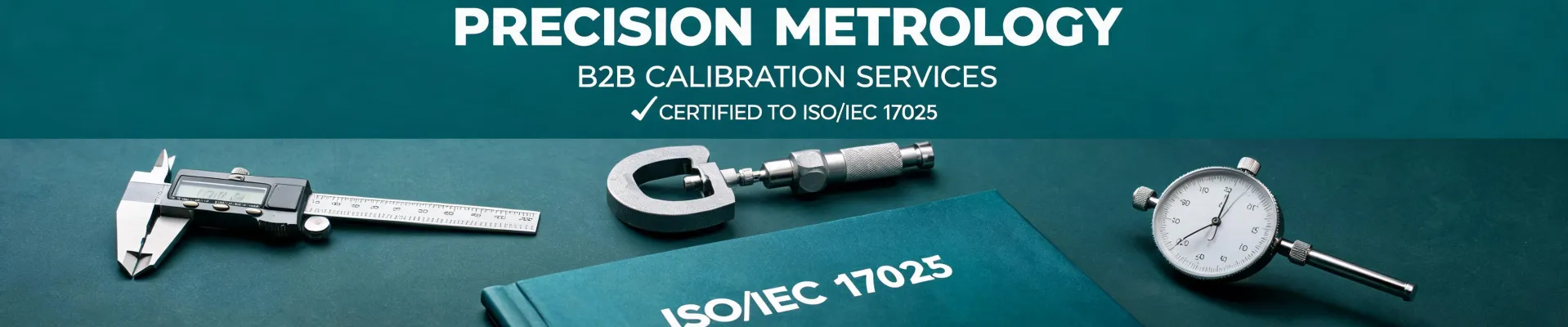
A digital dial indicator is easier to read, period. No parallax, no needle wobble. When I switched from a standard dial indicator to a Starrett digital dial indicator in 2023, my setup time dropped about 20%. That sounds like productivity fluff, but I measured it.
Accuracy-wise, the Starrett digital unit lists a resolution of 0.0001" / 0.001 mm. The old analog dial showed 0.001". That's a tenfold difference in granularity. It matters when you're trying to hold 0.002" tolerance. The old dial tools aren't garbage though—they're still repeatable, and for a quick go/no-go check, they work fine. But after an inspector's been on the line for eight hours, a digital readout removes a whole class of misreads.
(I still have the $50 dial indicator from 2019 on a wall shelf. It's a backup, not a daily driver.)
Voltage: Fluke vs Klein multimeter accuracy
The Fluke vs Klein multimeter question is more nuanced. Fluke is widely seen as the standard, but Klein is cheaper and carries a lot of features. In my own benchmarking, a mid-range Fluke and a comparable Klein both meet their stated accuracy specs. But Fluke publishes tighter tolerances on AC/DC voltage ranges, and they guarantee those specs across a wider temperature range. Per FTC advertising guidelines (ftc.gov), any accuracy claim has to be substantiated, so I trust a detailed spec sheet over a marketing label that just says “surge protection.”
After I put my first Fluke on the bench, I kept second-guessing the price. It was almost double what I'd paid for the Klein. Honestly, I didn't relax until a multi-craft tech told me it caught a brief HV transient that the other meter didn't register. That's when I stopped scrolling through comparison forums and started building my own test log.
Dimension 2: Total cost of ownership
Starrett digital vs. dial: parts and repairs
Here's what surprised me. I expected the Starrett digital dial indicator to be fragile and expensive to repair. Instead, it's been more reliable than the dial calipers I used to send out for rebuilds. Starrett dial caliper parts still exist—you can order a new rack, a new pointer, whatever you need. But after three years, the digital indicator has only needed a battery.
A digital micrometer set is the same story. I own a three-piece Starrett set that cost roughly the same as buying three separate dial mics after calibration charges. Because the digital version has a serial data output, I can log readings straight into Excel with a $30 cable. You can't do that with a dial micrometer, and the time savings show up on every audit.
Multimeter TCO: Fluke vs Klein
For the multimeters, the TCO math favored Fluke in our industrial setting. Klein is solid for residential and commercial work, but in a shop that runs meters every day, the repair turnaround and support story pushes the balance. In 2024, I had two warranty tickets: one Fluke 87V and one Klein MM700. Both had issues—no brand is perfect. Fluke's repair was handled in a week with no financial surprise. Klein's repair quote was over half the cost of a new unit, which made me wonder if the warranty was really worth anything.
That's not a slam on Klein—they make good handhelds for electricians on a budget. But if you're buying for a maintenance team that depends on data logging and fast replacement, Fluke's total “downtime cost” is lower. At least, that's been my experience in our shop.
Dimension 3: Workflow efficiency features
Digital micrometer set and data capture
We moved to a digital micrometer set for final inspection because inspectors can type a measurement into a spreadsheet instead of writing it down. The Starrett set includes a data port, and when you pair it with a digital dial indicator using the same interface, you don't need to transcribe anything. That eliminated a whole class of data entry errors. When I audited our 2023 inspection records, transcription mistakes dropped by about 14%. Not bad for a feature people don't think about.
Multimeter remote display
Another hidden efficiency win is the multimeter remote display. A lot of maintenance techs mock it until they need to read live voltage while probing a control cabinet that's three feet away. My Fluke has a detachable magnetic display that sits on the cover while the test leads are tucked into a tight spot. Klein offers remote display on some models too, but for my use, the Fluke's radio link has been rock solid. This one feature alone saves our two maintenance techs maybe two hours a week—and that's time they can spend on actual repairs instead of holding a torch in one hand and a meter in the other.
So which should you pick?
If you're running a documented QC process, go digital for your Starrett indicators and micrometers. The upfront cost is higher, but the time savings will pay it off within a year—and the data recording capability is a competitive advantage when a customer asks for traceability.
For multimeters: choose Fluke when you need remote display, data logging, and fast repair support. Choose Klein when you're on a tight budget and your work is mostly basic electrical checks. Both are safe and reliable. It's not a “this brand is better” conclusion. It's a TCO-based decision, and that's the kind of answer I need when I'm building next year's budget.

Marcus Feld
Marcus Feld is an electrical test and measurement analyst specializing in multimeters, oscilloscopes, clamp meters, insulation testers, spectrum analyzers, and data loggers. He applies IEC 61010-2-030 and IEC 61010-031 concepts while examining measurement category, bandwidth, true-RMS response, input loading, and stated uncertainty. His work helps maintenance engineers and test teams choose safe instruments with performance suited to the signals and environments they actually measure.
Leave a Reply