
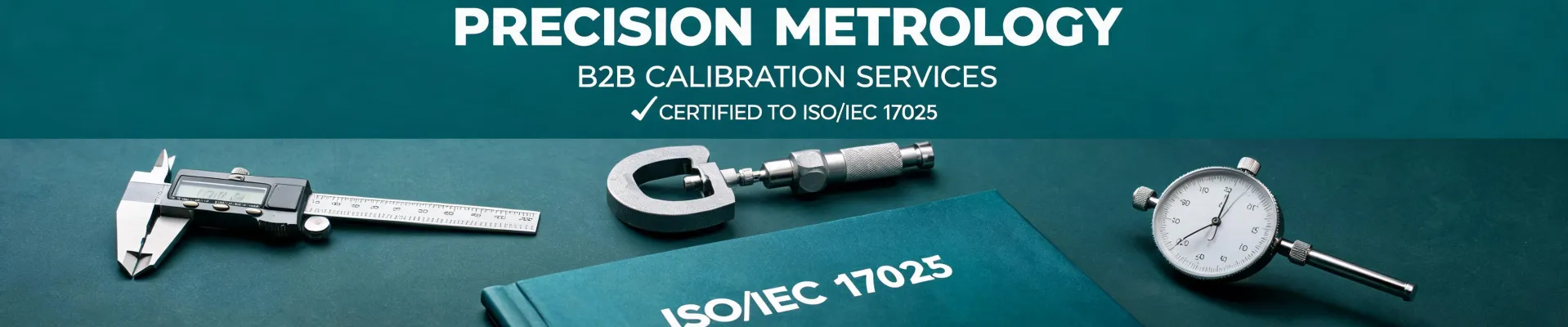
The fastest way to waste money on precision tools is to buy a brand without defining the measurement task first. I've ordered equipment for a small shop for eight years, and I've personally made six significant purchasing mistakes—actually seven, if you count the encoder wheel—that added up to roughly $11,000 in wasted budget. If I could go back and do it again, I wouldn't automatically buy the premium-brand version of everything. I would buy the right tool for the feature, and I would make sure the seller took a one-tool order seriously.
Why I can say this without a corporate badge
In my first year (2017), I was the person who hit “purchase” after checking only the price. We ran a 12-person shop that did both fabrication and small electronics repair. We didn't have a formal approval chain for tooling. I thought any “good brand” would be better than the last one.
Then we lost a $3,200 job because I ordered the wrong type of micrometer. Actually, I didn't even know there were types. The depth on all 90 pieces was 0.006 inch off, and they all went into the rework bin. That's when I started keeping a checklist. Over the past 18 months, that checklist has caught 47 potential errors, mostly “right brand, wrong model” situations.
Three mistakes that shaped my buying rules
1. The outside micrometer that couldn't measure depth
In 2019, we needed to check a blind bore on an adapter for a customer. I told the salesperson over the phone, “We need a micrometer.” They heard “outside micrometer.” What arrived was a perfectly good 0-1 inch outside micrometer—useless for a 2-inch-deep bore. The work order was waiting, so I paid for a replacement gasket and wasted two days before I ordered the depth micrometer Starrett makes. That tool worked, and I've kept it on the shelf ever since, but the cost was much higher than the price tag.
The lesson wasn't about brand recognition. It was about specifying the feature: diameter, depth, ID, step, etc. The depth micrometer Starrett set has rods and a base that sits on the surface, so it gave me the reading I actually needed. It's tempting to think two micrometers are basically the same. They are not.
2. The Starrett 123 caliper nobody trained me to use
I bought a Starrett 123 caliper because I wanted something that didn't rely on a battery. It's a good tool: a 6-inch vernier caliper that reads to 0.001 inch. But a new tech looked at it, tried to use it like an electronic caliper, and put it back because “it was confusing.” It sat in the drawer for about a year.
Most buyers focus on measurement range and completely miss training time. The Starrett 123 has no digital display. You have to read the vernier line, and that's a skill. Once we added a small magnifier and a printed guide to the toolbox, it became the preferred caliper for quick checks. It's a great tool, but only if you understand what it is.
3. Oscilloscopes, encoder wheels, and the sample-rate trap
My first bench oscilloscope looked good on paper: 100 MHz bandwidth, brand-name price, low cost. It turned into a headache when I tried to capture the pulse train from an encoder wheel on a motor. The signal looked awful, so I assumed the encoder wheel was bad. I bought a new one, installed it, and the waveform still looked like a row of rounded hills. The problem wasn't the encoder. It was the scope's sample rate.
For encoder pulses, most cheap oscilloscopes don't sample fast enough. If I'd bought a 50 MHz scope with 1 GS/s sampling instead of a 100 MHz scope with a weak sample rate, I would have saved the replacement encoder cost and two evenings. Most people ask about bandwidth. The better question is: “What's the sample rate and memory depth?” This is one of those counter-intuitive purchases where less bandwidth but better sampling is the right answer.
4. The “where to buy Fluke multimeter” question
New technicians ask me “where to buy Fluke multimeter” almost every month. My standard answer: use Fluke's official distributor locator on fluke.com. Counterfeit Fluke meters are everywhere on unsupported marketplaces, and the fakes look close enough until the protective fuse fails. I know from a $40 mistake that turned into a $170 replacement and a near-embarrassing warranty denial. Authorized distributors are not always the cheapest, but they're the only place I trust for something that measures live circuits.
Small orders deserve a real answer
One of my first orders was a single Starrett 123 caliper. One vendor never replied. Another vendor spent 15 minutes explaining the difference between vernier and digital scales. That vendor got my repeat business, including a $9,000 tooling order last year.
Small doesn't mean unimportant—it means potential.
A practical spending plan for a small shop
If I started over with a small fabrication/electronics shop, I'd buy:
- A Starrett 123 caliper for general dimensions and friction checks.
- A depth micrometer Starrett set for bores, steps, and slots.
- A benchtop oscilloscope with at least 1 GS/s sample rate (even if bandwidth is lower).
- A genuine Fluke multimeter from an authorized distributor.
That set doesn't look impressive, but it covers 80% of the mechanical and electrical checks we actually run. According to Starrett's official site (starrett.com), the company has been making precision instruments since 1880. That history matters for support, but it still doesn't replace the simple question I should have asked earlier: “What exactly am I measuring?”
When this advice falls apart
If you're just checking a sheet of wood or cutting fabric, a $25 tape measure is more honest than a $200 caliper. If the tool will be borrowed by people who don't care about calibration, buy something replaceable. And if you only need to measure one batch of parts, rent a depth micrometer instead of buying one. I have mixed feelings about pushing premium tools on small budgets: on one hand, they last for decades; on the other, I've seen nice instruments stay locked in a drawer because nobody wanted to scratch them.
This is based on my own experience in a 12-person shop, not a lab standard. If you're working under controlled temperature with formal quality requirements, you need calibration certificates and environmental records, and no amount of brand heritage replaces that.
The right tool isn't the most expensive one. It's the one that's actually used, and the vendor who helps you choose it when your order is small. I still keep a checklist, and I still make mistakes. But I've stopped making the same $11,000 mistake twice.

Marcus Feld
Marcus Feld is an electrical test and measurement analyst specializing in multimeters, oscilloscopes, clamp meters, insulation testers, spectrum analyzers, and data loggers. He applies IEC 61010-2-030 and IEC 61010-031 concepts while examining measurement category, bandwidth, true-RMS response, input loading, and stated uncertainty. His work helps maintenance engineers and test teams choose safe instruments with performance suited to the signals and environments they actually measure.
Leave a Reply