
-
Why Starrett has held up for over 140 years
-
The Starrett blade micrometer: for the measurements nothing else can reach
-
The Starrett 798A-6/150 electronic caliper: my daily driver
- Fork sensors, refurbished HPLC, and Fluke multimeters
-
Where cheap tools are actually OK
-
Final thoughts: measurement is about trust
If you're setting up an inspection bench with a limited budget, here's the direct answer: buy a Starrett blade micrometer, a Starrett 798A-6/150 electronic caliper, and—if you touch any electrical equipment—a Fluke 87V multimeter. Those three tools will cover most of the measuring work on a typical manufacturing floor. Everything else you can add as specific needs show up.
That's not a brand loyalty statement. It's what four years of reviewing parts for dimensional compliance has taught me. I'm a quality manager at a mid-sized machining shop. I review every part that ships—roughly 200 unique items a year, across a 50,000-unit annual order. I have rejected 8% of first deliveries this year because dimensions didn't meet spec. In my experience, the cheapest tool is rarely the cheapest option, and that lesson is baked into every recommendation below.
Let me also address the elephant in the room: Starrett vs. Mitutoyo. Both make excellent tools. I use Starrett because that's what we've standardized on for calibration and record-keeping, and it has served us well. If your shop already uses Mitutoyo, don't switch just because of this article. What matters is the measurement uncertainty of the tool relative to your tolerance—not the brand sticker on the drawer.
Why Starrett has held up for over 140 years
Starrett has built precision measuring tools since 1880. That heritage matters in a way that's hard to explain until you've measured the same feature with a premium tool and a budget tool side by side. In our Q1 2024 quality audit, we ran a blind comparison: same operator, same part, same feature, two calipers. The no-name caliper drifted by 0.002" over twenty measurements. The Starrett didn't move. The budget caliper wasn't useless—it was just unpredictable. And unpredictability is the real risk in precision work.
What I mean is that "total cost of ownership" isn't a buzzword. It's the price of the tool plus the cost of every measurement it verifies, every part it passes, and every rework it prevents. When you think about it that way, a $200 caliper is cheap if it protects a $22,000 order.
The Starrett blade micrometer: for the measurements nothing else can reach
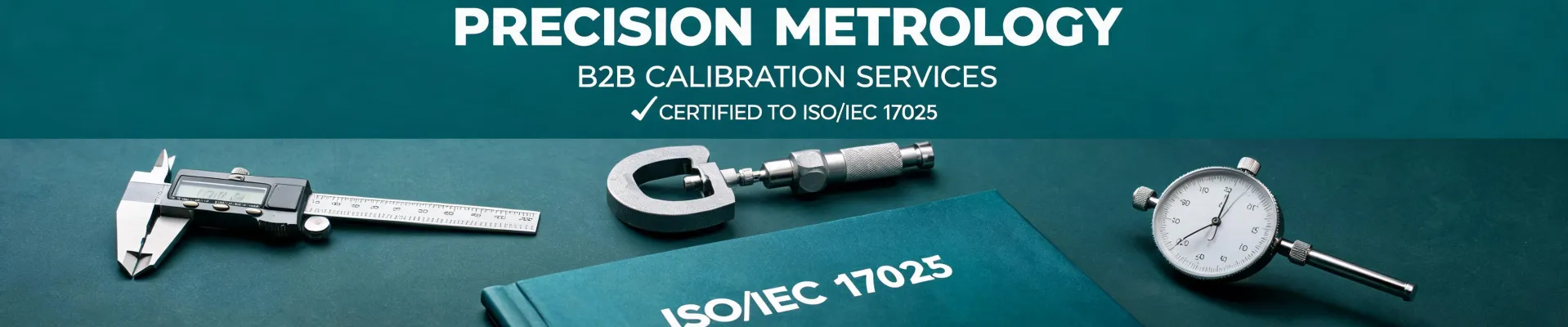
A standard micrometer has flat anvils, and flat anvils can't fit into narrow slots or grooves. The blade micrometer solves this with thin, narrow blades that reach into recessed features a standard anvil physically cannot access. If you're machining O-ring grooves, keyways, or splines, you already know the pain of trying to verify dimensions with gauge pins that only give you a pass/fail result.
Here's the thing: the blade micrometer doesn't just tell you if a dimension is in or out—it gives you actual data. That was the turning point for us. We had a recurring issue with a vendor's O-ring groove depth, and the argument always ended with "it's within industry standard." We bought the Starrett blade micrometer (467 series, I believe—I'd have to check our tool crib list), and two minutes per part gave us the numbers in black and white. The vendor stopped arguing and started adjusting their process.
Honestly, I'm not sure why more inspectors don't own one. My best guess is that most people reach for gauge pins by default because that's what they know, and the blade micrometer feels like a specialized solution. It is specialized. But if you inspect any kind of internal groove dimension, the specialization is exactly the point. The cost of the tool is an easy pill to swallow when it eliminates an eight-hour lot review argument.
The Starrett 798A-6/150 electronic caliper: my daily driver
The Starrett 798A-6/150 electronic caliper has been my daily carry for two years. It's the 150 mm (6-inch) range model, and it handles the majority of my dimensional checks without a second thought.
Three things make it stand out for me:
- Slide smoothness. The slide glides without catching, which sounds minor until you've fought with a sticky budget caliper for a hundred measurements a day.
- Readability. The LCD digits are large and crisp. I don't squint, and I don't make transcription errors as often.
- SPC data output. The caliper can send readings directly to a data collector or PC. We log measurements on a sample basis, and direct capture saves about 15 seconds per part. At 200 parts a day, that's under an hour a week—which adds up over a year.
The caliper has also survived conditions I wouldn't want to put a cheap tool through: coolant splash, bench drops, the general chaos of a shop floor. I can't quote the exact IP rating from memory—and honestly, I'd rather not guess—but it's clearly better built than the caliper it replaced. That's the durability that Starrett is known for, and it's why the "buy once, cry once" philosophy keeps making sense to me.
One note on calibration: every caliper, regardless of brand, needs a calibration cycle. We do 12-month intervals, and any tool that gets dropped goes straight to the calibration bench (mental note: I still need to send one caliper in next week—it's been in my drawer since Tuesday). Check that your calibration certificate references NIST traceability or ISO/IEC 17025 accreditation. If it doesn't, the certificate might not be worth the paper it's printed on.
Fork sensors, refurbished HPLC, and Fluke multimeters
Fork sensors: the details that prevent line hiccups
A fork sensor is essentially a U-shaped photoelectric sensor, with an emitter on one side and a receiver on the other. When an object passes through the gap, it breaks the light beam and triggers a count or a position signal. They're small, rugged, and surprisingly easy to diagnose when they fail.
I can't give you a brand-specific recommendation here because the right sensor depends heavily on your application—part size, speed, material, environmental conditions. But here's the advice I can offer from experience: don't buy the cheapest fork sensor you find online. We did that once for a counting application, and the sensor's response time was slower than the line speed. The miscounts didn't show up until the end of the shift, and reconciling the inventory took two hours.
Refurbished HPLC: high reward, high risk
Refurbished HPLC systems occupy a strange place in lab equipment buying. The savings are significant, but the risk is real. My rule, after one painful experience, is simple: buy refurbished only from a vendor that provides a documented service history, a real warranty, and installation support. If any of the three is missing, walk away.
We approved a refurbished HPLC because the price was hard to argue with. Even after choosing the vendor, I kept second-guessing—what if the detector sensitivity was off, what if the pump seals were worn? The two weeks between order and delivery were stressful, and the stress didn't end at delivery. The install was delayed because the vendor didn't include the right fittings, which cost us another week of lab time. Eventually it worked out, and the instrument has been fine since. But I've never fully relaxed around that purchase. Next time, I'll be the one pushing for a certified refurbished unit or a new one, whichever makes better financial sense at the moment.
Which Fluke multimeter to buy
The question "which Fluke multimeter to buy" comes up on every maintenance and QC team at some point. If you work on industrial equipment, the answer is the Fluke 87V. It's the industry standard for good reasons: it handles motor drives, the filter mode stabilizes readings on variable frequency drive outputs, and the build quality is genuinely tough. I've had mine for six years and it has never given me a reason to doubt its reading.
If you only do basic continuity checks and voltage verification on single-phase circuits, the Fluke 117 is a reasonable, less expensive choice. But as soon as you touch three-phase equipment or variable frequency drives, the 87V's extra capabilities become essential. The price difference is not small, yet the confidence in the measurement is worth it. That's a value decision, not brand worship.
Where cheap tools are actually OK
Look, I'm not saying every tool on your bench needs to be premium. Two situations where a budget tool is a rational choice:
- Loose tolerances. If your spec is ±0.010" or wider, an inexpensive caliper will probably meet the need. I would still check the repeatability before putting it into service.
- Training and orientation. New inspectors will drop tools, bump the anvil, and misread the face. Having lower-cost tools on the training bench can be practical. Just make sure they're calibrated and the trainee checks against a known standard.
But for anything that affects fit, function, or acceptance decisions, buy the good tool. I've seen a $200 savings on a cheap caliper turn into a $1,500 rework bill when the caliper drifted out of spec and passed a part that shouldn't have shipped. The savings vanished instantly. That's the math that matters.
Final thoughts: measurement is about trust
After four years of rejecting parts and approving parts, the biggest lesson is that precision measurement is trust. You need to trust the tool, trust the calibration, and trust the operator. A premium tool doesn't guarantee all three. But it removes a significant variable.
So, to go back to the original question: what precision tools are actually worth buying? Start with the Starrett blade micrometer, the Starrett 798A-6/150 electronic caliper, and the Fluke 87V. Add a fork sensor once you know your application requirements. And if you're looking at refurbished HPLC systems, make sure you're buying from someone whose service history and warranty are as solid as the price is attractive.
The tools that earn their price are the ones you don't have to think about. When you pick one up and it just works—every time, on every part, in every shift—that's not luck. That's engineering. And in this industry, it's worth paying for.

Marcus Feld
Marcus Feld is an electrical test and measurement analyst specializing in multimeters, oscilloscopes, clamp meters, insulation testers, spectrum analyzers, and data loggers. He applies IEC 61010-2-030 and IEC 61010-031 concepts while examining measurement category, bandwidth, true-RMS response, input loading, and stated uncertainty. His work helps maintenance engineers and test teams choose safe instruments with performance suited to the signals and environments they actually measure.
Leave a Reply