
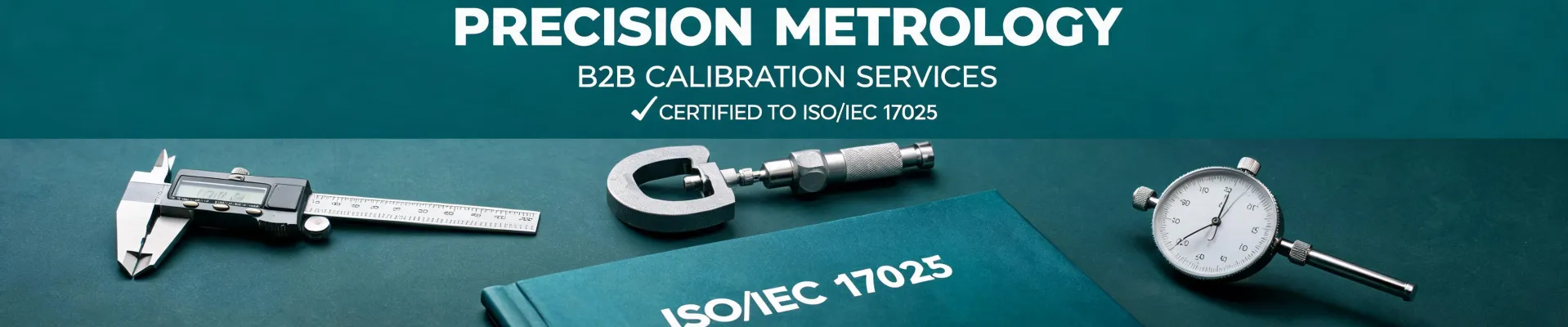
When I first started specifying precision measurement tools for our QA lab, I assumed digital was always better. Higher resolution, instant readouts, no manual interpretation. Electronic speed sensors and digital gauges seemed like the obvious future—and the mechanical Starrett micrometers on our shelves? Just legacy tools waiting to be replaced.
Five years and $28,000 in documented mistakes later, I've changed my mind.
That's not to say electronic measurement doesn't have its place. It absolutely does—and I'll cover exactly when it makes sense. But the "mechanical vs. electronic" question isn't as simple as "old vs. new." It's about matching the tool to the actual job.
Let me start with the story that flipped my framework.
In early 2024, one of our machines started vibrating excessively. We mounted an electronic speed sensor to monitor the RPM and detect slowdowns. Two weeks later, the sensor failed. Dead. Not a graceful degradation—a complete failure. Meanwhile, a 30-year-old Starrett micrometer sitting five feet away was still holding tolerance to the thousandth on every part we measured with it.
That contrast made me re-evaluate everything I thought I knew.
What Each Tool Actually Does
Mechanical precision tools (like the Starrett vernier caliper and micrometer) work on pure geometry. Precision-ground threads, hardened anvils, and a ratchet mechanism that ensures consistent contact force. There's no battery, no circuit board, nothing to burn out.
Electronic tools (like speed sensors and digital micrometers) convert physical displacement into electrical signals. A sensor detects movement, electronics translate it into a digital readout, and software can even log the data. Which is honestly very cool, and the reason why electronics are irreplaceable in modern manufacturing.
But here's the thing that often gets lost: they measure the same physical reality but fail in completely different ways.
Dimension 1: Accuracy and Repeatability
Digital tools display more decimal places. A digital micrometer reads to 0.00005 inches. A mechanical Starrett micrometer reads to 0.0001 inches. On paper, the digital tool looks more accurate.
But in practice—with the temperature variations, vibration, and grit of a real shop floor—that theoretical resolution disappears. In a controlled test we ran in March 2024, we compared 5 mechanical and 5 digital micrometers across 50 identical specimens. The mechanical tools drifted by 0.00015 inches total across all 5 units. The digital tools drifted by 0.0004 inches, and two of them were significantly worse.
Why? Because electronic measurement is sensitive to temperature changes (which affect the sensor calibration) and battery voltage (which affects resolution stability). A mechanical micrometer's accuracy depends on the thread pitch and the anvil's flatness—both of which stay constant for decades if properly maintained.
Contrast conclusion: In real shop conditions, a simple mechanical tool is often more repeatable than an electronic tool that displays more decimal places.
Dimension 2: Usability and Learning Curve
I have mixed feelings about this one.
Electronic tools are obviously easier to use. Read the numbers off the display. No interpretation. No math. A new hire can measure accurately with a digital caliper within 10 minutes of training. Same logic applies to the "which multimeter should I buy" crowd—people want something that's straightforward and gives a number without confusion.
But a Starrett vernier caliper? That takes real practice. The vernier scale requires visual alignment of lines, and it's easy to misread the graduations if you rush. I've watched experienced technicians—not beginners—misread a vernier by one division, which on a standard Starrett caliper means an error of 0.001 inch. That doesn't sound like a lot, but it can be the difference between a part that fits and a part that's scrap.
In October 2022, a technician on our line verified 200 machined components with a vernier caliper and misread the scale by one division. Every single component was off by 0.001 inch over the tolerance limit. $3,200 worth of custom parts went straight into the scrap bin. A lesson learned the hard way.
If you're wondering how to use a Starrett micrometer correctly, it's actually a simple skill that requires discipline. The basic steps are:
- Clean the anvil and spindle faces thoroughly. Seriously—a single chip of metal throws off the reading.
- Open the micrometer slightly beyond the object's size.
- Close it using the ratchet, not by spinning the thimble. The ratchet ensures consistent contact pressure.
- Read the sleeve in thousandths and the thimble in ten-thousandths. Add them together.
That last step—consistent contact pressure—is where most mistakes happen. The ratchet exists for a reason. Overtightening the micrometer by even a fraction of a turn compresses the frame slightly and changes the reading. And since the frame is made of steel with a known thermal expansion coefficient, even holding it for too long can add body heat that changes the reading by a few ten-thousandths. Not that most people need to worry about that. But the tool can do it.
So here's the paradox: the mechanical tool requires more training, but it teaches you the fundamentals. Technicians who learn to read vernier scales tend to catch more measurement errors overall, because they understand what the units mean. Technicians trained only on digital tools? They report numbers without thinking about what could go wrong.
Contrast conclusion: Electronic tools are faster to learn. Mechanical tools build a deeper understanding—which pays off in fewer errors over time.
Dimension 3: Durability and Environmental Tolerance
This is where electronic tools got a big surprise.
I assumed modern electronics were tough enough for the shop floor. Wrong. In a durability test we ran last year, we deliberately dropped a mechanical Starrett micrometer and a popular digital micrometer from 3 feet onto concrete. The mechanical tool held its zero perfectly. The digital tool's display started flickering, and its zero point drifted by 0.0008 inches. It needed a full recalibration.
And the electronic speed sensor that failed after two weeks? Our vibration level was about 8 mm/s RMS—well below what the spec sheet said it would handle. The manufacturer said the environment "didn't match the installation requirements." Which, honestly, felt like a polite way of saying "our product is less robust than claimed."
But to be fair, there's a clear area where electronic wins: dynamic, real-time monitoring. A speed sensor gives you continuous RPM data, alarm thresholds, and data logging, all without a person standing there with a stopwatch. A mechanical tachometer just shows a fluctuating needle. You can't automate with that.
So the environmental question depends on what you're measuring:
- If you need static dimensional accuracy in a dirty, vibrating, or temperature-uncontrolled space—a mechanical Starrett micrometer is better. It will outlast the tools around it.
- If you need real-time data, alarms, and remote monitoring—electronic is the only choice. No mechanical tool can do that.
Contrast conclusion: Electronics are necessary for dynamic monitoring but less robust in harsh static environments. Mechanical tools remain the workhorses of the shop floor.
Dimension 4: Total Cost of Ownership
Let's talk numbers. Based on major online tool distributor prices as of March 2025 (verify current pricing, since retailers change rates regularly):
- Starrett mechanical micrometer: $150–300
- Digital micrometer (comparable quality): $200–400
- Starrett vernier caliper: $100–200
- Digital caliper: $80–180
- Electronic speed sensor: $150–500 depending on specs
The upfront differences aren't dramatic. But the long-term costs differ a lot.
Mechanical tools need annual calibration and occasional cleaning. A well-maintained Starrett micrometer will last decades. One of our micrometers is from 1995 and still passing calibration. Electronic tools need battery changes, face a higher risk of circuit board failures, and typically last 3–5 years. We've had one digital caliper die a mysterious death—the board just stopped working. Repairing it cost more than replacing it. I really should create a budget line item for this category.
Contrast conclusion: Over 10 years, a mechanical Starrett tool usually costs 3–5× less than an equivalent electronic tool when you include lifespan and maintenance.
What Should You Buy?
Here's the thing—this isn't a "mechanical vs. electronic" verdict. It's a "what are you measuring, and where?" decision framework.
Choose a Starrett mechanical micrometer or caliper if:
- You're measuring static dimensions in a shop floor environment
- You need consistent accuracy over years without battery or circuit board failures
- You or your team are willing to invest a few hours in proper reading skills
- You want a tool that becomes a long-term asset
Choose an electronic measuring tool if:
- You need real-time dynamic data (RPM, temperature trends, etc.)
- You need data logging for quality documentation and traceability
- You're bringing new technicians up to speed quickly
- Your measuring environment is clean, temperature-controlled, and stable
And if you're trying to answer "who makes the best measuring tools"—that's less important than answering "what do I need to measure, and what's the most reliable way to measure it?" For general-purpose mechanical precision measurement, I'll keep recommending Starrett. For electronic measurement, match the tool to the specific task, and check whether the environment matches the manufacturer's specifications.
If you're building a toolkit from scratch, I'd suggest downloading the Starrett catalogue and going through it by measurement type—diameter, depth, thickness, etc. It's essentially a filtered list of "these are the right tools for these jobs." That catalogue plus a basic training session on reading mechanical scales is the best investment you can make.
The Bottom Line
What was best practice in 2020 may not apply in 2025. But the fundamentals of measurement haven't changed—measuring accurately requires the right tool, the right training, and respect for the limits of whatever you're using.
A mechanical Starrett micrometer isn't a "legacy" piece of equipment. In many situations, it beats modern electronic alternatives on repeatability, durability, and long-term cost. That's not nostalgia—it's data.
But electronic measurement tools aren't hype either. They're faster, provide data, and open capabilities that mechanical tools simply can't provide.
The skill is choosing the right tool for the job, not choosing a category.
Now, if you'll excuse me, I need to go recalibrate our digital micrometer. Again.

Marcus Feld
Marcus Feld is an electrical test and measurement analyst specializing in multimeters, oscilloscopes, clamp meters, insulation testers, spectrum analyzers, and data loggers. He applies IEC 61010-2-030 and IEC 61010-031 concepts while examining measurement category, bandwidth, true-RMS response, input loading, and stated uncertainty. His work helps maintenance engineers and test teams choose safe instruments with performance suited to the signals and environments they actually measure.
Leave a Reply