
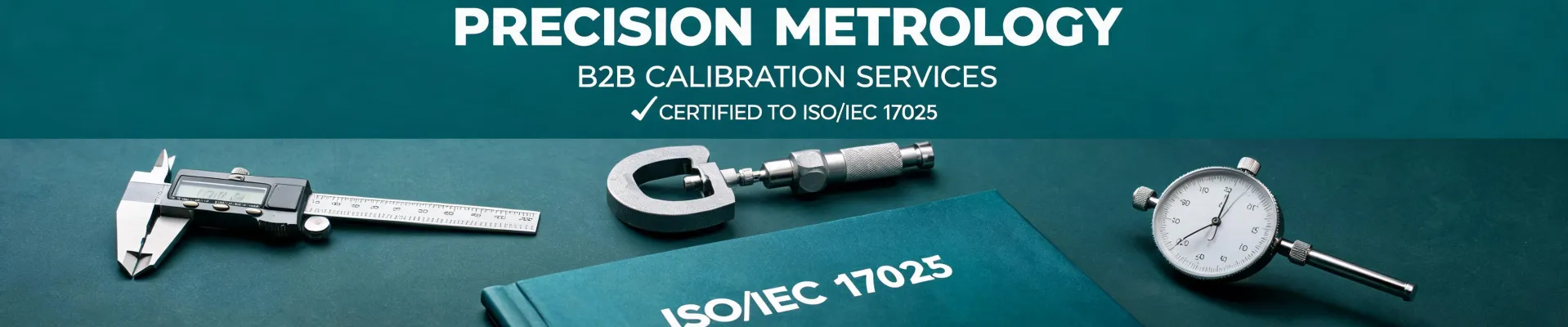
Last Tuesday at 3:38 p.m., a quality manager called me. One of his operators had dropped their only outside caliper, and a customer was due in the morning for an approval inspection. He didn't ask about brands. He didn't ask about calibration. He asked, 'Can you get a Starrett outside caliper here by 7 a.m.?'
That's the kind of call I get a few times a month. In my role coordinating emergency tool replacements for manufacturing plants, I've handled maybe 200 rush orders—no, 180, I'd have to check the spreadsheet—for everything from a Starrett digital depth micrometer to an amp clamp meter. The specific tool changes. The panic doesn't.
Sometimes the call is about a $500 tool. Sometimes it's about a '10 multimeter price' decision—should we buy a $10 meter or spend more? And every now and then, someone asks me how much is a FLIR thermal camera because a client suddenly wants thermographic reports for a building they've already sold.
On the surface, these are all logistics questions: How fast can you ship? But the deeper problem is not the shipping. It's that we treat measuring instruments as if they're interchangeable commodities. They're not.
The surface problem: I need it yesterday
If you've ever been in that position, you know the feeling. The production line is waiting. The audit deadline is fixed. The client doesn't care how many websites you checked. You just need certainty delivered by a specific time.
At that point, price becomes secondary. A $10 multimeter sounds sensible when you're shopping on Wednesday afternoon for a Friday task. It sounds less sensible when it gives you a 2-volt error and you've already swapped out a good circuit board. (Trust me: I've seen the replaced board sitting on the shop bench.)
But the surface problem is still real. When a critical tool breaks or gives a bad reading, the immediate pain is time. I've paid $94 in overnight freight for a $268 micrometer. I've done it more than once. That's not a fun sentence to write, but it's the truth.
The real problem: precision tools became commodities in our minds
The deeper cause is harder to see. Since the early 2000s, it became easy to order any tool online and have it show up in two days. The word 'caliper' appears in a search, and you're looking at twelve listings from eight brands. Without technical context, price becomes the deciding factor. The $12 caliper undercuts the $120 Starrett. The $20 meter undercuts the $180 meter. The $90 thermal camera undercuts the $1,500 FLIR.
That's not automatically wrong. A cheap tool is sometimes the right decision. But when you buy purely on price, you are making an unstated assumption: that all measurements are equally important. They're not.
Here's where my opinion comes in. I don't think you need the most expensive version of everything. I do think you need to separate 'measuring for reference' from 'measuring for a decision.' A ruler is for reference. A Starrett outside caliper is for decisions. A $10 multimeter is fine for seeing if a AA battery has any life. It is not fine for reading the output voltage of a drive or troubleshooting a 480-volt motor circuit.
The accuracy trap
In a precision tool, accuracy isn't a marketing phrase. It's a specification with a unit. When a manufacturer writes 0.0001 in. or 0.0005 in., that's a tolerance you can verify. If a cheap tool doesn't state a tolerance anywhere, you have no standard to compare it against. It might be accurate. It might not. You won't know until a part is scrapped.
Per FTC Business Guidance on Advertising, claims have to be truthful, not misleading, and substantiated with evidence. That's not just about ads; it's a useful test for any technical specification. If a listing says 'accurate to 0.001 in.' without saying how it was verified, treat it as marketing.
The calibration gap
There's another layer: calibration. Even a brand-new Starrett digital depth micrometer can drift if it's dropped or if the battery is changed carelessly. That's not a flaw; it's physics. The question is whether you have a way to verify it. In a real shop, the cost of a tool isn't just the purchase price. It's the calibration, the traceable certificate, and the downtime to get it done.
The cheap tool from the internet often has no calibration traceability. If your customer asks to see the last calibration sticker, the $12 caliper isn't a bargain. It's a liability.
What a bad measurement actually costs
This is where I go from theory to stories.
In March 2024, a client called me at 3 p.m. on a Friday. Their quality department needed a Starrett digital depth micrometer for an audit at 8 a.m. Monday. Normal delivery from their local distributor was five business days. I found one at a dealer in another state, paid $94 for overnight freight on top of the $268 tool, and it arrived at the plant at 9:40 p.m. The audit passed.
If we hadn't found it, the client would have faced a $15,000 penalty clause and a potential production hold. The extra $94 wasn't an expense. It was an insurance premium.
The same logic applies to a '10 multimeter price' search. If you mean a $10 meter, think about the last time you trusted one with a live circuit. A bad reading can send you on a wild goose chase through a control panel. I've seen technicians replace a good PLC output card because their cheap meter read 0 volts on a circuit that was actually live. That cost $1,800. The meter cost $15.
An amp clamp meter has its own math. When you're measuring motor current on a VFD, the waveform is not a clean sine wave. A non-true-RMS clamp meter can be off by a serious margin—when I checked one budget meter against a proper true-RMS clamp meter on the same load, the budget meter read 4.8 amps and the true-RMS meter read 6.2 amps. That's not close enough for any decision.
And thermal cameras? The question 'how much is a FLIR thermal camera' can be answered three ways. Entry-level phone attachments now roughly price around $200-$300. Handheld professional models run roughly $1,500-$5,000. And if you need a certified report, you may need to rent the camera plus a trained operator. For one inspection, renting is often cheaper than buying. For a recurring maintenance program, buying is cheaper.
The small-order problem
A lot of the panic I see comes from smaller companies that are afraid to ask for help. They assume a $500 order isn't worth a distributor's time. That's completely backwards.
When I was starting out, the vendors who treated my $200 orders seriously are the ones I still use for $20,000 orders. I've watched a $120 replacement indicator order turn into a $28,000 account eighteen months later. Small doesn't mean unimportant. It means potential.
What to do when the measurement really matters
If you're about to buy any precision tool on a deadline, I suggest a different process:
First, define the risk. Ask: What happens if this reading is wrong? If the answer is rework or lost customer, stop trying to save money on the tool. If the answer is we can remeasure it tomorrow, a cheaper tool may be fine.
Second, buy for the measurement, not the category. For mechanical inspection, a Starrett outside caliper and a Starrett digital depth micrometer are choices made by people who know a measurement has to be repeatable. For electrical work, buy a true-RMS amp clamp meter from a brand with a track record. For thermal imaging, ask yourself whether you need to own the camera or just get the data.
Third, build a 48-hour buffer. Most of the rush orders I see didn't have to be rush orders. The tool broke on Monday. The audit was on Friday. The purchaser waited until Thursday afternoon to think about buying the replacement. The 48-hour buffer won't save every project, but it saves the ones where your own late decision was the real problem.
The bottom line
The next time you need a precision tool, look at the price tag last. Look first at the tolerance, the calibration, the shipping guarantee, and the support after the sale. A cheap tool isn't a problem if the measurement isn't critical. But in a factory, an audit, or an electrical panel, the measurement is usually critical.
And if you're one of those small shops with a small order and a tight deadline, don't apologize for it. I'd rather spend an afternoon finding you a Starrett outside caliper or a Starrett digital depth micrometer that gets your job done than push you to the bottom of the list. The size of the order tells me nothing about how much it matters to you.

Marcus Feld
Marcus Feld is an electrical test and measurement analyst specializing in multimeters, oscilloscopes, clamp meters, insulation testers, spectrum analyzers, and data loggers. He applies IEC 61010-2-030 and IEC 61010-031 concepts while examining measurement category, bandwidth, true-RMS response, input loading, and stated uncertainty. His work helps maintenance engineers and test teams choose safe instruments with performance suited to the signals and environments they actually measure.
Leave a Reply