
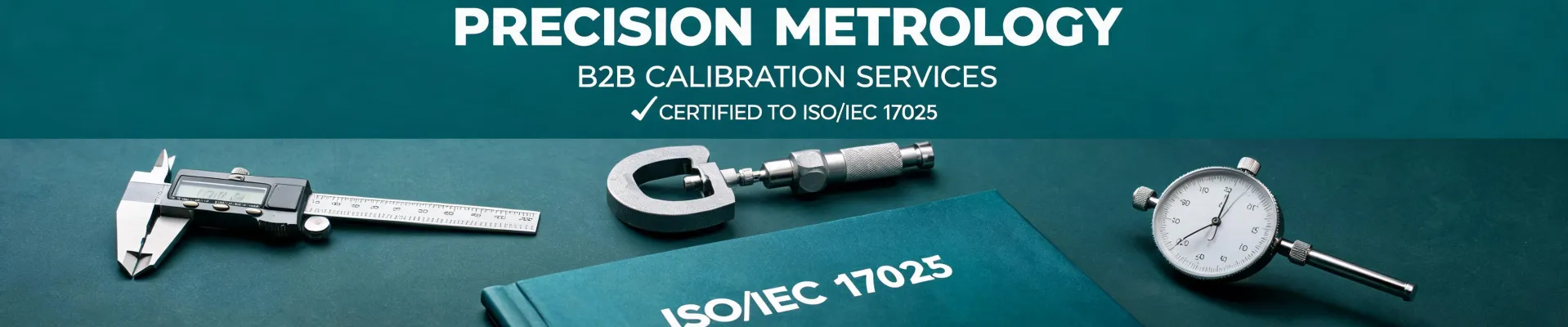
Last April, our QC supervisor walked into my office holding a caliper that looked fine from three feet away. He set it on my desk, opened the jaws, and pointed at the digital readout. It was reading 0.003 inch off on a 1.000 inch gauge block. The caliper was eight months old. It had never been dropped. It was from a no-name brand we bought to save about $22 a unit.
I run procurement for a 140-person contract manufacturing shop. We make aerospace and medical components, plus the kind of small precision parts where a shop floor caliper gets treated like a consumable. I have tracked every tooling and inspection expense for six years—about $180,000 in cumulative orders—and I build a TCO spreadsheet for every repeat purchase. That day became the reason for a new line in my spreadsheet.
How a Good Deal Gets Expensive
The cheap calipers seemed rational on paper. Same resolution, same IP rating, same depth rod, half the price. We ordered 35 units. At that price, even if they lasted half as long, we would break even. Right?
Wrong.
The failures did not show up in the first three months. They showed up when our inspectors started comparing readings from different calipers on the same part. One caliper said 0.6245 inch. Another said 0.6280 inch. That is not a measurement in precision manufacturing. That is a disagreement.
We sent six units to our calibration lab. Three were either out of tolerance or failing intermittently. That meant potentially hundreds of parts already released with readings we could not defend. Rework cost around $2,700 that month. The $22 savings per caliper disappeared. It came back with interest.
Looking back, I should have run a small pilot before rolling out 35 units. At the time, the budget pressure was real and the spec sheet looked fine. In my defense, that is the way it always looks in procurement.
What I Learned About Encoders
Here is where I have to be careful. I am not a metrologist, so I cannot speak to the deep engineering behind every encoder design. What I can tell you, from a procurement perspective, is that the encoder matters more than the resolution number on the box.
Digital calipers convert physical movement into a measurement using an encoder. If the encoder is easily contaminated by coolant, chips, or dust, the measurement drifts. When we pulled one of the failed calipers apart, the inside looked like the floor of our machine shop. Coolant had gotten past the jaw area and onto the scale.
We did not need better resolution. We needed better sealing.
According to ISO 13385-1, a caliper has to meet design and metrological characteristics that make it suitable for outside, inside, step, and depth measurements. Our lab verifies the basics against gauge blocks with NIST-traceable certificates. NIST traceability matters because a digital readout is just a number until it is tied to a known standard.
That is what pushed me toward the Starrett caliper 120A. The 120A uses a capacitive encoder design that is sealed up tight enough for shop floor use, and it keeps the 0.0005 inch resolution we need for most of our work. Is it the most advanced encoder on the market? I do not think so. But it is proven in the conditions that killed the cheap units.
Starrett vs Mitutoyo Calipers: The Honest Answer
Before I get hate mail, let me say this: I respect Mitutoyo. They make genuinely excellent metrology tools, and their Absolute encoder approach is really smart—no constant zero setting, no lost position when the battery dies. A lot of our machinists have used Mitutoyo for years. I am not going to claim Starrett is better than every competitor, because that is not how purchasing decisions should work.
But the question I get every time I mention this is Starrett vs Mitutoyo calipers. Which one is better? So here is the answer from a cost control perspective.
For our shop floor, the Starrett 120A won on total cost of ownership.
Here is why, in the order I weighted it:
- Durability. The 120A handled the drops and coolant exposure better in our side-by-side trial. We don't track drops formally, but a full year of tool crib signout data showed fewer Starrett returns for repair.
- Price. The 120A cost about 15 percent less than the equivalent Mitutoyo model. Not enough to ignore metrology quality, but enough to matter when you are outfitting an entire floor.
- Support. Our distributor stocks Starrett parts and can get a replacement in two to three business days. The Mitutoyo equivalent was a week or more for a warranty claim.
If I ran a calibration lab with controlled conditions and highly trained inspectors, I might choose Mitutoyo, and I would not argue with that choice. But our shop floor is not a lab. It is coolant, chips, and calipers riding in pockets next to C-wrenches. The Starrett 120A is built for that.
The Ball Micrometer Side Quest
While we were replacing the digital calipers, I also bought two Starrett ball micrometers. That sounds unrelated, but it is part of the same lesson about measuring curved surfaces.
We were getting inconsistent thickness readings on tubing and parts with convex radii. A flat-anvil micrometer cannot make good contact on a curved surface, so operators were guessing at feel. I do not need to tell you that is a disaster for repeatability.
A ball micrometer has a spherical anvil that seats on the radius instead of balancing on a tangent point. For tube wall thickness, or the radiused end of a part, it is a completely different measurement. The cost was about $200 each. One of them paid for itself the first time it caught a part that would have gone to assembly with a wall thickness 0.004 inch too thin.
Not the sexiest tool in the crib. Exactly what we needed.
The Real Cost Per Year
Let me put the TCO in numbers.
The cheap calipers:
Unit cost: about $18. Expected life before failure: about eight months. Cost of uncontrolled measurement error: $2,700 in a single month, plus a burned deadline and a customer who started auditing our inspection process.
The Starrett electronic calipers:
Unit cost: more, in the $110 to $130 range depending on quantity and distributor. Expected life: the ones we have had in service for a year are still within tolerance. Calibration cost: similar to any caliper, but with fewer out-of-tolerance surprises. Estimated annual cost, including purchase, calibration, and the occasional replacement: still less than one bad month of rework.
Roughly speaking, the Starrett calipers cost about six times more per unit, but they eliminated the majority of our calibration-related interruptions. In my book, that is a no-brainer.
What I Would Do Differently
If I could redo that original purchase, I would change two things.
First, I would buy a single sample before buying in volume. Even a 30-day trial on the floor would have shown us how the cheap units handled coolant. We did not need a six-month study. We needed one machinist to run one job with one caliper in his pocket.
Second, I would define the standard earlier. We checked accuracy on a gauge block, but we did not verify what happened after exposure to coolant. Now our procurement policy for all electronic measuring tools includes a shop-floor trial and a quick coolant mist test. It is not a scientific test. It is real enough.
We also had a customer audit coming two weeks after the failure, so I did not have time for a slow six-vendor comparison. I narrowed it to Starrett and Mitutoyo based on what our QC manager and two service reps recommended. Sometimes procurement is about accepting an imperfect decision in exchange for speed.
The Bottom Line
I am not here to tell you that Starrett is the only brand that works. That would be lazy. What I am saying is that the difference between a $22 caliper and a $120 caliper is almost never the number of digits on the screen. It is the encoder, the sealing, the support infrastructure, and the cost of getting it wrong.
Precision measuring tools are not the place to maximize upfront savings. Better to buy fewer Starrett electronic calipers that hold their zero, or add a set of ball micrometers for the curved parts you actually measure, than to fill a tool crib with tools you cannot trust. The fundamentals have not changed—calibrate, verify, trust your measurement. But the execution around those fundamentals is worth paying for. Our $2,700 lesson proved it.
Take it for what it is worth. I am a procurement guy, not a metrologist. But I have read enough calibration reports to know one thing: a caliper that argues with itself is worse than no caliper at all.

Marcus Feld
Marcus Feld is an electrical test and measurement analyst specializing in multimeters, oscilloscopes, clamp meters, insulation testers, spectrum analyzers, and data loggers. He applies IEC 61010-2-030 and IEC 61010-031 concepts while examining measurement category, bandwidth, true-RMS response, input loading, and stated uncertainty. His work helps maintenance engineers and test teams choose safe instruments with performance suited to the signals and environments they actually measure.
Leave a Reply