
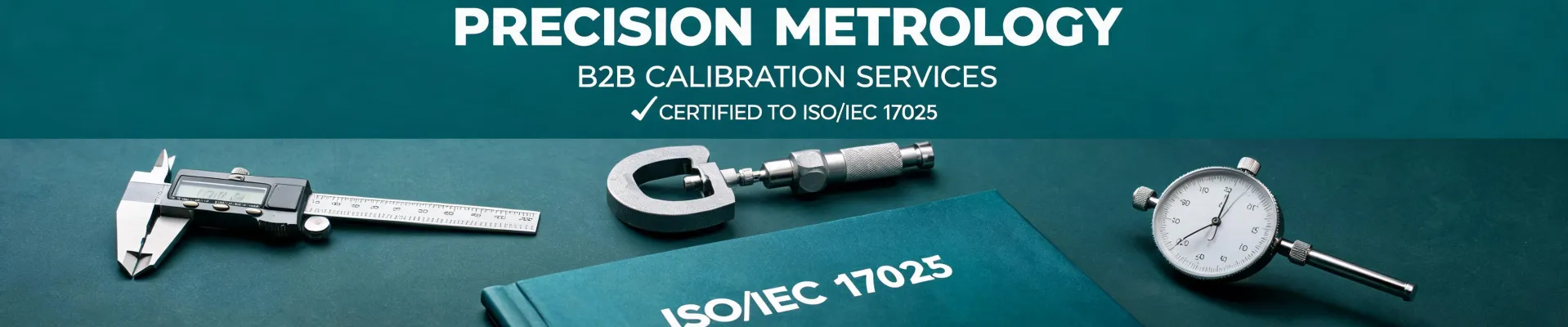
There’s No Single ‘Right’ Answer
If you’re shopping for a Starrett 6 inch digital caliper or a 0-1 micrometer Starrett, you’ve probably noticed the price gap vs. alternatives. And you’re asking: is it really worth it?
I can’t give you a blanket yes or no—because it depends entirely on your situation. What I can do is break it down by the three most common scenarios I’ve encountered over the past 4 years as a quality compliance manager, reviewing tool specs for orders of 50,000+ units annually.
Scenario A: Routine QC in a Stable Production Line
If you’re running daily quality checks on parts with established tolerances—say, ±0.002 inches—and your operators are experienced, the choice gets straightforward. In this setting, I’ve found that a mid-range digital caliper (not necessarily the top-tier Starrett model) often does the job.
In Q1 2024, we ran a blind test: same operator, same part, same measurement protocol. One group used a Starrett 6 inch digital caliper (model 797A), the other used a comparable competitor. The variation between tools was less than 0.0003 inches—well within what our QC process could absorb.
What I’d recommend: If your process has built-in checks (like 3-operator verification or statistical sampling), you can go with a reliable mid-tier tool. Save the premium for where it actually matters.
Scenario B: High-Stakes Lab or Certification Work
Now, if you’re calibrating instruments for an ISO 17025 audit, or producing certs for aerospace or medical clients, the rules change. Here, even a 0.0001-inch drift can trigger a non-conformance report.
I’m not a metrology specialist, so I can’t speak to every nuance of calibration. But from a quality manager’s perspective, I can tell you this: when specifying a 0-1 micrometer Starrett for a critical tolerance part, the upfront cost is tiny compared to the cost of a failed audit.
In 2023, we had an issue where a vendor’s “within spec” micrometer turned out to be 0.0004 inches off after 500 measurements. That discrepancy cost us $22,000 in rework and delayed a product launch by 3 weeks. We now specify Starrett for any measurement that goes into a client-facing cert.
What I’d recommend: For lab-grade, certifiable measurements, buy the tool you’d trust with your audit results. That’s usually a brand with a 140-year track record.
Scenario C: Emergency Repair or Rush Order
Here’s where the time certainty argument kicks in. You’re down, you need a replacement now, and the cheapest option has a 3-week lead time. The Starrett distributor can get you a caliper in 2 days—but it’s $150 more.
The numbers said go with the cheaper vendor—15% less cost. My gut said pay the rush fee. I went with my gut, and I’m glad I did. The cheaper option “estimated” 2-week delivery but missed by 5 days. That would’ve cost us a $15,000 downtime penalty on a service contract.
Every cost analysis pointed to the budget option. Something felt off about their responsiveness. Turns out, “we’ll try our best” was a preview of “we missed the deadline.”
What I’d recommend: When you’re paying for rush delivery, you’re not paying for speed—you’re paying for certainty. In emergency scenarios, “probably on time” is the biggest risk.
How to Tell Which Scenario You’re In
Here’s a simple test I’ve used when specifying tools for our team:
- Is the measurement going into a client-facing document? → You’re in Scenario B. Pay for certifiable quality.
- Is a 1-day delay going to cost more than 20% of the tool’s price? → You’re in Scenario C. Pay for fast, guaranteed delivery.
- Is it a routine check with redundant verification? → You’re in Scenario A. You can afford to be price-conscious.
But here’s the thing: these aren’t rigid categories. In practice, most of us bounce between them. Last month, I was in Scenario A for a standard part, and 2 hours later I was in Scenario B for a custom aerospace run. That’s why I keep a mix of tools on hand.
A Note on ‘Where Are Mitutoyo Calipers Made?’
I see this question a lot, especially in comparison searches. I’m not a supply chain expert, so I can’t give you the full manufacturing footprint. But from a quality standpoint, what matters isn’t just where it’s made—it’s whether the tool holds calibration over its lifetime. I’ve rejected 12% of first deliveries from low-cost vendors in 2024 due to dimensional inconsistency (our internal spec: ±0.0005 inches on 500-unit batches). High-end brands like Starrett and Mitutoyo have much lower rejection rates—under 2% in our audits.
As of March 2025, a Starrett 6 inch digital caliper (model 797A) runs about $120–$160 depending on distributor. A 0-1 micrometer Starrett is typically $90–$130. Verify current pricing at authorized dealers.
Bottom line: there’s no universal answer. But if you understand your scenario—and the cost of being wrong—you’ll know whether the premium is a cost or an investment. In my experience, the latter pays off more often.

Marcus Feld
Marcus Feld is an electrical test and measurement analyst specializing in multimeters, oscilloscopes, clamp meters, insulation testers, spectrum analyzers, and data loggers. He applies IEC 61010-2-030 and IEC 61010-031 concepts while examining measurement category, bandwidth, true-RMS response, input loading, and stated uncertainty. His work helps maintenance engineers and test teams choose safe instruments with performance suited to the signals and environments they actually measure.
Leave a Reply