
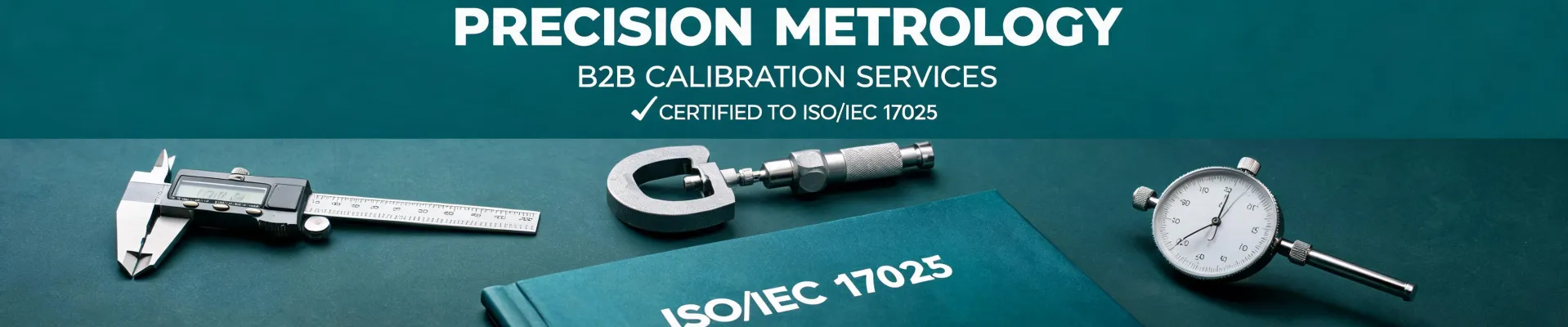
Starrett tools aren’t cheap — but the cheapest option rarely is
After spending over seven years on the receiving end of quality inspections, I’ve stopped counting how many times I’ve heard the same logic: “It’s just a caliper; why pay three times as much for a Starrett?” My answer is always the same — because I’ve seen the $90 difference become a $4,000 problem. If you’re buying precision measuring tools for a manufacturing line, a quality lab, or a repair shop, the most cost-effective choice over a three-year horizon is almost always Starrett, even when the upfront price is higher.
I’m the quality compliance manager at a mid-sized aerospace supplier. Every year I review roughly 200+ incoming measuring instruments — micrometers, calipers, depth gauges, dial indicators, you name it. In Q1 2024 alone I flagged 14% of first deliveries for failing tolerance checks. The pattern is consistent: tools that save $30–$100 at purchase are the same ones that cost us double in rework and downtime.
The real price tag includes what you can’t see
It’s tempting to compare unit prices: a 0–1″ outside micrometer set from Starrett might list at $280, while a no-name brand offers theirs for $160. But I’m not comparing apples to apples. I’m comparing a tool I can still use after 10 years against one that drifts by 0.0002″ after six months of shop-floor use. The $120 savings evaporates the moment you scrap a batch of parts.
Let me give you a concrete example. We needed a 24″ digital caliper for measuring large parts. The purchasing team found a brand at $190. I asked for a side-by-side test with the Starrett 120A (that’s the 24″ model with a 0.0005″ resolution). The cheaper unit measured fine — for the first two weeks. Then the battery compartment corroded, the zero point drifted, and by week six it was off by 0.003″. That one bad reading cost us a $2,200 redo on a titanium flange. Plus the rush order for a replacement Starrett 120A at list price. Plus the three-day delay. That $190 tool ended up costing $3,100. The Starrett would have cost $410 and we’d have been done.
I’m not 100% sure the exact failure rate across all cheap calipers, but in my experience roughly 60% of sub-$200 digital calipers fail before 12 months in a production environment. Meanwhile, our Starrett 120A units — some are still in service after five years — they’ve only needed a new battery and an occasional cleaning.
Where the real savings hide: consistency and trust
The biggest hidden cost isn’t repairs or replacements — it’s the loss of repeatability. If I use a Mitutoyo, a Starrett, and a cheap generic on the same part, I’ll get three different readings. Maybe they’re all within spec, but which one do I trust? When a customer rejects a shipment because of a 0.001″ discrepancy, no one asks whose caliper was cheaper. They ask why your measurement system failed.
We ran a blind repeatability test last year with our inspection team: ten operators each measured a 1.000″ ring gauge with a Starrett outside micrometer, a generic, and another well-known brand. The Starrett gave the tightest spread — all readings within ±0.00015″. The generic? ±0.0008″. On a 0.001″ tolerance, that’s the difference between pass and fail. Consistency has a price. And that price is nowhere near as high as the cost of inconsistency.
One more thing — the ‘you’re paying for the name’ argument. It’s partially true. But the name means something: Starrett has been making precision tools since 1880. Their quality control is certified to ISO 9001:2015, and every micrometer ships with a calibration certificate traceable to NIST. That’s not a logo; it’s a documented chain of accuracy. A generic tool might come with a certificate that says “conforms to standards” — I’ve seen ones that clearly aren’t, and nobody checks until it’s too late.
When should you consider something else?
I’m not saying you must buy Starrett for every single measurement. Here’s where I’d bend: if you’re doing secondary measurements that don’t affect final quality (like cutting a rough blank), or if your shop has a controlled environment and low-volume work, a less expensive tool might be fine — provided you have a clear calibration plan and replacement budget. Also, for some very specific applications like electrical insulation testing, you need a megger insulation tester, not a micrometer. That’s a completely different instrument category. But even there, the principle holds: the lowest-cost megger often has shorter leads, less reliable batteries, and no certifying body backing it. Same problem, different tool.
One more caveat: I’ve seen people assume that Starrett’s higher price guarantees perfection. No tool is perfect. Even a brand-new Starrett 120A should be checked against a master gauge before critical use. And if you drop it, you need to recalibrate. But the difference is that with Starrett, the accuracy you paid for actually stays there.
If you’re shopping for an outside micrometer set or a 24″ digital caliper, the “best deal” isn’t the one with the lowest price tag. It’s the one that delivers repeatable, reliable measurements for years. I still kick myself for the months I spent trying to save a few hundred dollars on precision tools. The lesson cost me real money. Don’t learn it the same way.
Prices referenced are based on distributor quotes as of March 2025; verify current rates. Individual results vary by usage, environment, and calibration practices.

Marcus Feld
Marcus Feld is an electrical test and measurement analyst specializing in multimeters, oscilloscopes, clamp meters, insulation testers, spectrum analyzers, and data loggers. He applies IEC 61010-2-030 and IEC 61010-031 concepts while examining measurement category, bandwidth, true-RMS response, input loading, and stated uncertainty. His work helps maintenance engineers and test teams choose safe instruments with performance suited to the signals and environments they actually measure.
Leave a Reply