
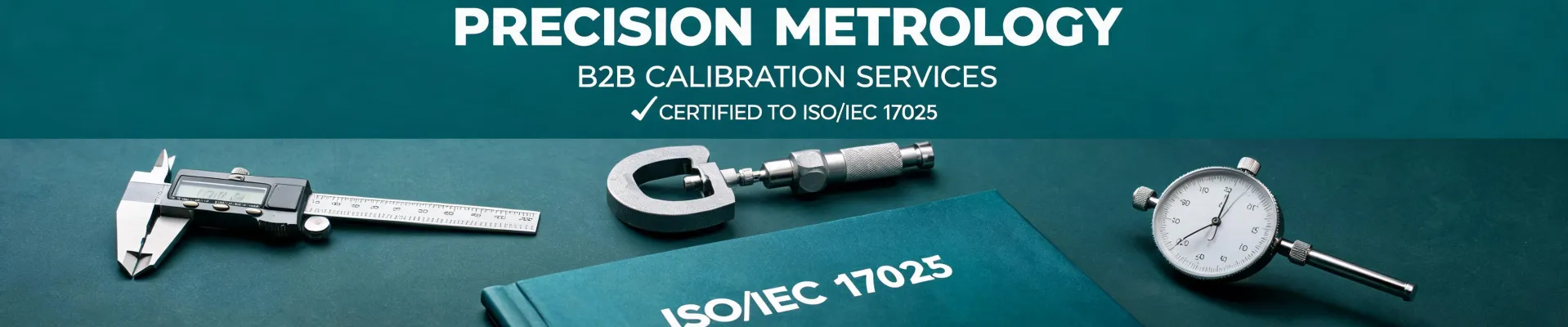
Nine years ago, I inherited a job nobody in my shop wanted: buyer for precision measuring instruments. I've made plenty of expensive mistakes since then—enough to fill a binder, roughly $3,100 worth of wasted budget total. I've ordered calipers with no calibration certificates. I've approved dial indicators with sticky movements. I've paid for expedited shipping I didn't need while the order sat in a queue for three days. And I've documented every one of those failures, because my job now includes maintaining the incoming-inspection checklist that prevents the next person from repeating them.
Here's my position: "one-stop shopping" for precision equipment is a trap. The supplier who tells you "this isn't our specialty—here's who does it better" is the supplier who deserves your next order.
That's not a line I learned in a procurement seminar. It's what $3,100 in mostly self-inflicted errors taught me, one mistake at a time.
The 60-caliper order that should've been simple
In March 2022, our production floor needed new dial calipers. Every workbench, every inspection station, every kit. I sent out a request and got back a quote from a broad-line industrial supplier that sold "everything for your shop"—cutting tools, safety equipment, tool storage, calibration services, and, apparently, calipers.
The pitch sounded great. One account. One invoice. One point of contact. "Why manage five vendors when one phone call covers it all?" That's exactly the logic that got me into trouble.
I ordered 60 of their house-brand dial calipers at $30 each: $1,800 total. The delivery showed up two weeks late. Each caliper came without a calibration certificate. The dial face was hard to read in normal shop lighting. And on about twenty of the sixty units, the thimble felt like it was dragging sand.
When I called support—genuinely wondering whether the gritty ones were defective or just "how they are"—the answer I got was, "let me check with the manufacturer." Then nothing for two days. Then an answer that boiled down to "we're not sure, but they should be fine." They didn't have a calibration lab, and they couldn't tell me what "in spec" meant for their own product.
We boxed up all 60, returned them, and waited for replacements. The replacements were identical—same model, same vague support. We kept them as shop-floor spares, but I built a separate inspection checklist for every one of them before I let anything move to the floor. That was the moment I stopped trusting catalog sellers for things that require expertise.
I still kick myself for that order. I went back and forth for a week before placing it. The specialist option—a real precision-tool distributor that stocked Starrett—would have cost more, and it would have taken a couple of extra days. But I'd have gotten tools from a maker that's been doing precision measurement since 1880, with calibration documentation I could actually use. In hindsight, the "savings" wasn't savings. It was an advance payment on a mistake.
The single-source fallacy falls apart when you ask one real question
The conventional wisdom says consolidate your vendors. Fewer accounts, better pricing, less paperwork. It sounds logical. It sounds professional. The problem: the logic breaks the moment you ask a real technical question.
Last fall, an automation retrofit needed an efector laser sensor for position detection. The efector product line comes from ifm, and ifm has spent decades specializing in industrial sensors. I called the same broad-line distributor from the caliper disaster, because by then they were one of my "approved" accounts. "Sure," the sales rep said, "we can source that for you." Then I asked a basic question, the kind that matters for installation: what's the sensing range on a target with 10% reflectivity?
Dead silence. Then: "I'll check with the manufacturer and get back to you." Two days later, I got an answer that was wrong (I verified it against the datasheet myself). I hung up, called a small sensor-only distributor, and had the right part on my bench in three days.
Same pattern, different kind of gear: our materials lab needed a centrifuge for sample prep. The generalist sent me a quote for three models with zero explanation of how to choose. I don't know centrifuges. So I went to someone who does—a used lab-equipment dealer whose entire business is centrifuges. He sold me an Eppendorf 5810 R, the workhorse tabletop centrifuge that labs across the world run for a reason, and he could tell me its service history, which rotors were compatible, and exactly what maintenance to expect in the next two years. Did I enjoy adding another vendor to my list? No. Do I regret it? Not for a second.
And when a colleague asked me where to buy FLIR thermal cameras for our predictive maintenance program, I didn't send him to a general tool catalog. I told him to find a thermal-imaging specialist—someone who can explain what thermal sensitivity specs actually mean, how the software integrates, and which model matches an electrical inspection workload instead of a roofing survey. Because that's the difference between buying a tool and buying the right tool.
Here's the thing: none of those specialists pretended to sell everything. The sensor distributor doesn't do calipers. The centrifuge dealer doesn't do thermal cameras. The thermal camera house doesn't do micrometers. And that's exactly why they're good at what they do.
What this means for a simple caliper purchase
A caliper looks simple. It's not. The rack and pinion inside the dial has to move smoothly without backlash. The beam has to stay rigid across its full measuring range. The jaws need careful grinding so both contact surfaces stay parallel. And the dial face needs to be legible enough that a machinist can trust a reading to 0.001 inch or 0.02 mm at a glance. Those details are the entire difference between a reliable measuring tool and a decorative one.
That's why I buy Starrett for mechanical measurement. Not because Starrett is the only company that can make a caliper—they're not. But because they've spent 145 years focused on precision measurement, and that focus shows up in the details that matter on our floor. The Starrett metric dial caliper, for example, reads to 0.02 mm on a dial that's actually usable all day long. The Starrett 123 caliper is a design that's been around long enough to prove itself—the geometry of the frame, the stiffness of the beam, the feel of the thumb roll. My machinists ask for them by name.
I've never asked Starrett for an efector laser sensor or a thermal camera or a centrifuge. That's not their lane, and I don't expect them to be in it. But when I need micrometers, dial indicators, depth gauges, or a Starrett 123 caliper for the bench, I know exactly where the boundary sits. And I buy from the people who live inside it.
Yes, multiple specialists is a hassle. It's still worth it.
You might be thinking what I thought before the $1,800 lesson: "a dozen specialized vendors is a nightmare to manage." It is. More accounts. More purchase orders. More phone calls. I answer more questions from purchasing about why we have so many suppliers now.
But the math isn't close. The caliper disaster cost $1,800 in product plus a two-week headache plus a production delay I still feel embarrassed about. The sensor distributor cost me one phone call and saved me from at least a week of troubleshooting an incorrectly selected sensor. Could a generalist know both calipers and sensors deeply? Sure—one in a thousand might. But in nine years of doing this, I've met exactly one person who could hold a real technical conversation in two different product categories. One. That's not a pattern I'm willing to bet against.
And there's a signal in how a supplier handles a request outside their lane. When a vendor says "that's not our strength; here's who does it better," they're telling you they care about your outcome more than their commission on that order. That honesty is what earns them the business inside their lane. It's how trust works in procurement.
The conventional wisdom said one stop covers it all. My binder says otherwise.
Know the boundary. Respect the boundary. And buy from the specialist whose expertise sits squarely inside what you're buying. If they're honest enough to point you elsewhere when you need something different, they're the right people to keep on your list.

Marcus Feld
Marcus Feld is an electrical test and measurement analyst specializing in multimeters, oscilloscopes, clamp meters, insulation testers, spectrum analyzers, and data loggers. He applies IEC 61010-2-030 and IEC 61010-031 concepts while examining measurement category, bandwidth, true-RMS response, input loading, and stated uncertainty. His work helps maintenance engineers and test teams choose safe instruments with performance suited to the signals and environments they actually measure.
Leave a Reply