
-
Why compare Starrett against budget tools in the first place?
-
Accuracy: What "good enough" actually means
-
Durability: The floor is where decisions get made
-
Total cost over five years: the conclusion that surprised me
-
Documentation and calibration: the compliance angle
-
When I'd skip the premium: Megger vs insulation tester
-
The thermometer parallel: right tool for the right job
-
Which should you choose?
I run purchasing for a 90-person manufacturing shop. Every year, I place roughly 70–80 orders for the tools our machinists, QC staff, and maintenance technicians rely on. When I took over in 2020, I could not tell you the difference between a caliper that would last ten years and a caliper that would last ten weeks.
I learned.
Here is the honest comparison I wish someone gave me: Starrett precision tools versus budget alternatives. I will say up front—I buy mostly Starrett now. But there are places where I'd skip the brand premium entirely. That's the part you don't hear from either side.
Why compare Starrett against budget tools in the first place?
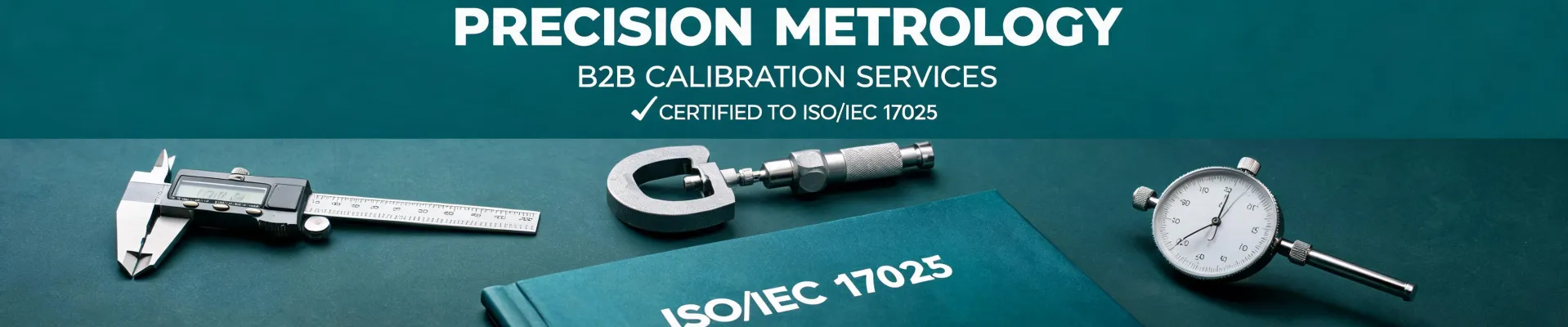
If you work anywhere near QC, you've seen the debate in every toolbox: the Starrett caliper 120A and the Starrett dial indicator with magnetic base on one side, and generic calipers and indicators at a fraction of the price on the other.
When I started, the budget option seemed obvious. It measured... just like the Starrett did. Why pay more when a cheaper caliper displays the same numbers?
The numbers weren't the same. I just didn't know it yet.
What separates these tools comes down to four things: accuracy under real conditions, durability on the shop floor, total cost over the long run, and paperwork when it's time to calibrate. That's true whether we're talking calipers, dial indicators, or complete inspection kits.
Accuracy: What "good enough" actually means
Out of the box, a Starrett 120A dial caliper and a budget caliper can both read a dimension within their stated resolution. Key word: stated.
Here is where they diverge. The Starrett 120A uses a hardened stainless-steel rack and pinion, factory-tested and consistent. My machinists pick it up at 7 a.m. and get the same reading at 3 p.m. Week after week. The budget calipers shift. A burr on the rack. A jaw losing its parallel. A 0.002" drift that turns two identical parts into rejects.
Dial indicators have their own failure points—a sticky plunger, a bezel that rotates on its own, a needle that doesn't return to zero. That's where the Starrett design separates itself. The jeweled movement is built for continuous use. Budget dial indicators often use bushings instead of jewels. You can't see the difference on a spec sheet. You feel it in the first 1,000 cycles.
In my first year, I made the classic rookie mistake: bought eight budget indicators and calipers to save about $400. Three months later, QC flagged inconsistent readings between two stations. We had to redo a $600 job. Finance noticed. My internal customers noticed.
That was my gradual realization—after four years and roughly 200 tool orders, I've come to believe that the "best" precision tool is the one you're not constantly re-buying. The sticker price tells you what you pay today. The failure rate tells you what it actually costs.
Durability: The floor is where decisions get made
The Starrett dial indicator with magnetic base is my favorite test case. The indicator rides on a stem, sits in a hardened steel case, and gets dragged across machine beds. It gets knocked. That's the job.
My Starrett indicator has been bumped off a surface plate by an operator who wasn't looking. Twice. It still reads true. I've watched a budget indicator take one accidental drop and lose its zero permanently. And the magnetic base? The Starrett base holds firm, switches cleanly, and stays where you clamp it. The cheap knockoff slipped at the worst possible moment—during an alignment check—and shook my technician's confidence. That tool went into a drawer and never came out.
So glad I paid the premium on that set. I almost went with the bargain kit to stay inside our quarterly budget. It would have meant reordering six months later, and explaining to my VP why the maintenance crew had no working indicator. Dodged a bullet.
Total cost over five years: the conclusion that surprised me
Here's where the comparison flips. Do the math over five years, not five minutes.
A Starrett 120A caliper costs roughly three times a budget caliper. But the budget caliper drifts, breaks, or loses credibility within two years. You replace it. Now your savings are gone. In my experience, the "premium" is closer to prepaying for a decade of service than to paying extra for a brand name.
To be fair, I get why someone chooses the budget tool. Budgets are real. If you need an occasional caliper for low-stakes measuring in a clean room, the budget tool probably works fine. But anything that lands in QC records or customer deliverables? Cheap gets expensive. Period.
Documentation and calibration: the compliance angle
Our shop carries ISO 9001 certification. That means every measuring tool needs traceable calibration and documentation. Starrett handles this well.
When I order a Starrett 120A, I get specification sheets and factory calibration info. When I send a dial indicator back for calibration, the documentation that comes back satisfies our auditor. No chasing. No back-and-forth.
Budget vendors? I get an invoice. Maybe a certificate that looks official. FTC advertising guidelines (ftc.gov) require claims to be truthful and substantiated, but that doesn't guarantee every marketplace listing has the evidence to back its "class 1 accuracy" claim. Buyer beware.
Also consider shipping. When tools go out for calibration, we pay insured shipping. USPS rates (effective January 2025, per usps.com/stamps) have climbed again. If your tool needs annual calibration, freight costs start to rival the tool price. That changes the value equation further.
When I'd skip the premium: Megger vs insulation tester
Brand loyalty isn't a religion for me. I've learned to question the premium when two products perform the same job to the same standard.
Take the megger vs insulation tester question. Megger is a brand that became shorthand for a megohmmeter—a device measuring insulation resistance. The brand-name Megger is genuinely well-built. But a certified insulation tester from another reputable brand can match it for significantly less.
I'd buy a Megger if our electricians used it daily and I needed proven ruggedness. I'd buy a compliant insulation tester for scheduled checks. In this category, the brand premium does not automatically justify itself.
The thermometer parallel: right tool for the right job
Same principle applies in the opposite direction. Search "thermometer fever temperature" and you'll find a shelf of medical devices calibrated for human body temperature. Search "industrial temperature probe" and you'll find a completely different category.
A fever thermometer is a precision instrument for a narrow range. An industrial thermocouple handles temperatures that would destroy it. Same word—thermometer—two entirely different tools. The right choice depends on the measurement context, not the brand halo.
The question isn't "is this a good tool?" It's "is this the right tool for our job?" That question is worth asking before every purchase, not just the big ones.
Which should you choose?
Here's my bottom line, for what it's worth:
- Choose Starrett when the tool feeds into QC data, gets daily use, or your techs depend on it. The Starrett caliper 120A and the dial indicator with magnetic base are the ones I approve without a second thought.
- Choose the budget option for occasional, low-stakes measurement, when the budget genuinely will not stretch, and when you can accept replacing it sooner. Just don't pretend the economics are the same.
- Evaluate independently when the premium is a name rather than a functional gap—like a megger vs insulation tester. Compare data sheets, compare calibration support, and pay the premium only when the evidence backs it.
Five years ago, I picked the cheapest tools on the shelf and called it smart. If you ask me now, the smart purchase is the one that measures the same ten years from now. That's why my orders say Starrett. Not because of the label. Because of the math.

Marcus Feld
Marcus Feld is an electrical test and measurement analyst specializing in multimeters, oscilloscopes, clamp meters, insulation testers, spectrum analyzers, and data loggers. He applies IEC 61010-2-030 and IEC 61010-031 concepts while examining measurement category, bandwidth, true-RMS response, input loading, and stated uncertainty. His work helps maintenance engineers and test teams choose safe instruments with performance suited to the signals and environments they actually measure.
Leave a Reply