
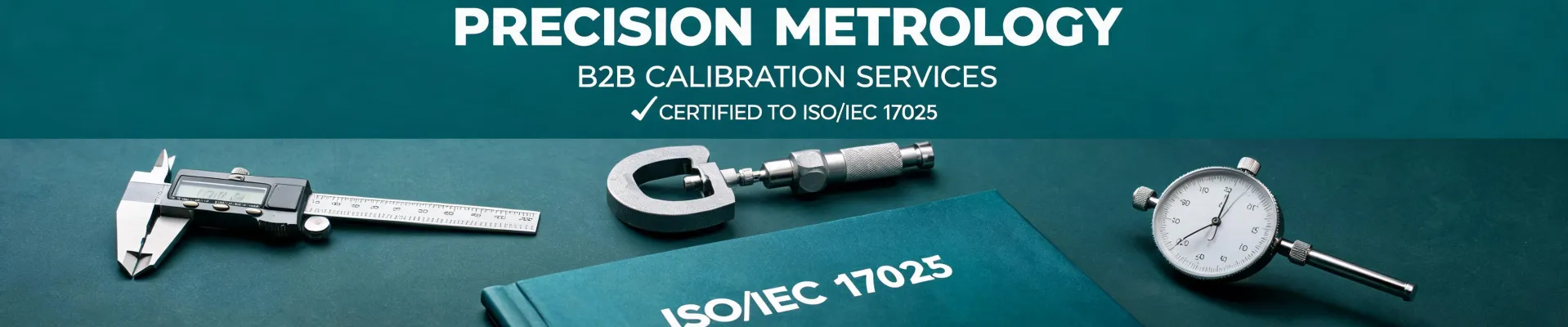
Six PM and a Dial Indicator That Lied
Last March, I was standing in our QC room at six in the evening, holding a dial indicator that was off by 0.0005 inches. Our inspector Marco had just flagged a batch of 120 machined parts that had already passed through final inspection hours earlier.
"We need to talk," he said, holding up the indicator. "This thing is reading everything with a variance."
My first thought was: the tool is lying. My second thought was: we just shipped parts based on those readings.
That was the moment I realized my brilliant idea about buying used test equipment wasn't so brilliant.
The Lab Expansion and the Budget
I'm the procurement manager at a 30-person manufacturing company. I've managed our equipment budget—roughly $180,000 a year—for six years, documented every order in our cost tracking system, and negotiated with more vendors than I can count. Our company has been around for 20 years, but we never had a proper QC lab until this contract forced the issue.
We make components that have to fit, and I mean fit—not "close enough." Our customers measure everything. If a dimension is off by half a thousandth of an inch, the part gets rejected. That's the world we live in.
Earlier this year, we landed a contract that required documented measurements for every batch. The QC lab needed an upgrade: new dial indicators, a centrifuge for sample prep, micrometers, and electrical test equipment.
My mandate was simple: equip the lab without blowing the budget. So I started researching.
The centrifuge price quotes I got were all over the place. $2,800 for a basic unit. $4,200 for a mid-range with better temperature control. $8,500 for a heavy-duty model. My first instinct was the $2,800 one. Same function, right?
Around the same time, I started browsing used test equipment listings. There were some tempting deals—particularly a used dial indicator at $82. A brand-new one from Starrett would run me $237. The savings felt obvious.
I wish it'd stayed that simple.
The $82 Gamble
Here's where I made the classic mistake. I assumed "calibrated and certified" meant "as good as new." I didn't dig into the details. I didn't verify that the serial number on the calibration certificate matched the instrument. I just assumed. Didn't verify. Turned out the certificate was for a different unit.
I knew I should have checked the serial number. I literally told myself, "What are the odds?" Well, the odds caught up with me.
The used dial indicator read everything within tolerance. Marco believed it. Our QC process believed it. We shipped the batch.
Then the customer's incoming inspection caught the problem. Off by 0.0005 inch. Not a lot—unless you're making components that mate with other components. For us, it was a fail.
Total redo cost: $1,200 in materials and labor, plus two days of rescheduling. The "savings" on my $82 purchase was $155.
Let me say that again. $155 saved. $1,200 spent. That's not a trade. That's a disaster.
Rebuilding the Right Way: Starrett Official Website
Had about 48 hours to source a replacement before the next batch went into production. Normally I'd drag my feet, compare three vendors, and embarrass whoever was asking for an update. No time. I had to make a call with the information I had.
That's when I found what I should have bought from the beginning: the Starrett dial indicator 196.
I went to Starrett's official website and spent an afternoon reading through their spec sheets. The clarity was refreshing. Exactly what I needed. The Starrett dial indicator 196 has a documented repeatability spec, an ISO 17025-compliant calibration certificate, and a warranty that means something. The price—$237—was exactly what I'd been avoiding. But now I understood what that $237 bought me.
People think expensive tools cost more because of branding. That's backwards. The tools that deliver verified precision can charge a premium because they actually are precise. The causation runs the other way.
The brand has been around for 140+ years for a reason. Precision manufacturing is a game of earned trust, and I'm starting to understand that the hard way.
I ordered a Starrett dial indicator 196 through their official channel. What struck me was how the process handled a small customer like us. No minimum-order attitude. No "you're not a big distributor, why should we take you seriously" tone. Just solid customer service and a straight answer to my calibration questions.
When I was starting in this role, the vendors who treated my $200 orders seriously are the ones I still use for $20,000 orders. That matters more than I can say.
The Hioki vs. Fluke Comparison and the Centrifuge
While I was sorting out the dial indicator issue, I still had to finalize the rest of the lab equipment. This time, I did the math properly.
For the multimeters, the classic question was Hioki vs. Fluke. I'll say this plainly: Fluke makes great tools. They're justified in their pricing. But when I compared total cost of ownership—initial cost, calibration interval, accuracy for our specific needs—the Hioki came out ahead for us. Better accuracy at a slightly lower price, and a longer calibration interval. That's not an attack on Fluke; it's just how the numbers played out for our application.
The centrifuge followed the same pattern. I'd initially leaned toward the $2,800 basic model. After the dial indicator lesson, I dug deeper: the basic model had more vibration (bad for precision work), a shorter warranty, and weak temperature control. The $4,200 mid-range model addressed all of those. Cost more upfront. Better total cost over five years.
I see the pattern now. My instinct was always to minimize the upfront price because that's the number that gets scrutinized in budget reviews. But the actual cost of equipment isn't the price on the PO. It's the price of fixing what goes wrong when the cheap option fails.
Lessons I'd Share With Another Buyer
If you're managing procurement for a small shop, here's what I'd tell you:
Total cost of ownership beats unit price, every time. That $82 dial indicator should have been $237 new. The real cost was $1,200 in redo work. Run a TCO calculation on everything over $500.
Used test equipment is buying someone else's depreciation. If the calibration certificate isn't transferable and verifiable, it's not a deal. It's a gamble.
Buy from suppliers who respect your size. The companies that took our small orders seriously are the ones I still buy from. Starrett earned that. The reseller who sold me the used indicator? I haven't gone back.
Verify. Verify. Verify. Serial number on the calibration certificate must match the instrument. If it doesn't, walk away. (Note to self: make this a standard checklist item for all incoming calibration equipment.)
The Math That Matters
I still check the used test equipment listings from time to time. Old habits die hard. But now, every comparison starts with the same question: what does error cost?
Since March, the Starrett dial indicator 196 has been on our QC bench, telling the truth consistently. It gets calibrated annually, and it hasn't drifted once. The total cost of ownership over its life—$237 purchase plus about $70 a year in calibration—is actually less than the $82 cheap gamble cost me in redo expenses alone.
That's the math that doesn't jump out at you from a price comparison table. But it's the math that matters.

Marcus Feld
Marcus Feld is an electrical test and measurement analyst specializing in multimeters, oscilloscopes, clamp meters, insulation testers, spectrum analyzers, and data loggers. He applies IEC 61010-2-030 and IEC 61010-031 concepts while examining measurement category, bandwidth, true-RMS response, input loading, and stated uncertainty. His work helps maintenance engineers and test teams choose safe instruments with performance suited to the signals and environments they actually measure.
Leave a Reply