
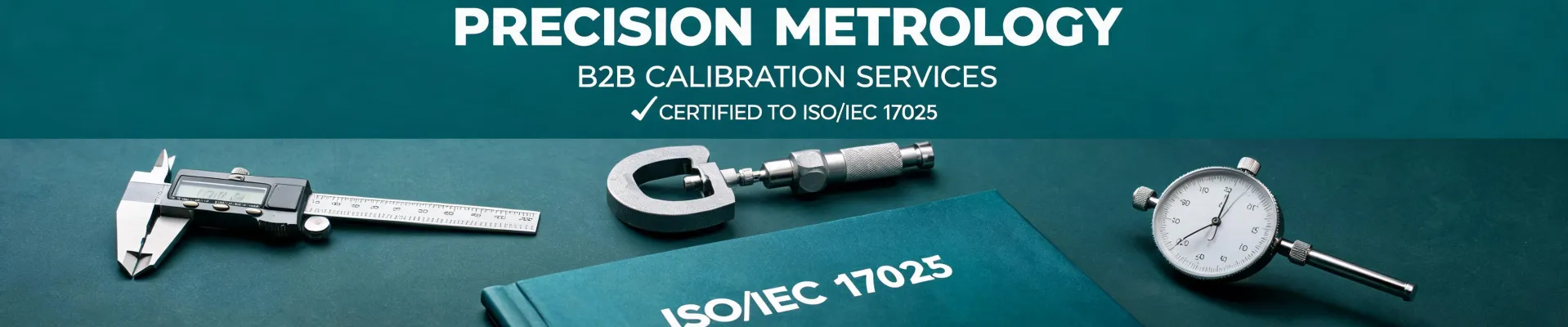
There's No Single 'Best' Caliper
If you've been down the Starrett vs. Mitutoyo rabbit hole, you know the internet wants a clean answer. It won't give you one. And after six years of tracking tooling spend for a 140-person manufacturing company, I'm not going to give you one either. The right answer depends on where the caliper lives, who's using it, and what failure costs you're trying to avoid.
The fundamentals haven't changed: a good caliper needs to repeat, and a shop needs to trust it. But the execution has transformed. Bluetooth output, IP67 coolant resistance, and digital calibration reminders changed what 'good enough' means. What was best practice in 2018 can be overkill in 2025.
Here's my goal: help you figure out which situation you're in, then give you a specific tooling answer for that situation. No universal winner.
Four Situations, Four Different Answers
In my experience, precision measuring tool purchases fall into four buckets:
- Machining cells that measure turned or milled features all day.
- Maintenance teams that need to check wear and fit, not hold tenths.
- QA labs that need traceability and calibration certificates.
- Electronics and repair benches where a caliper is a secondary tool.
Each bucket has a different sweet spot. Let me walk through them.
Situation 1: Machining Cells That Measure All Day
If your machinists are grabbing a caliper 30 times a shift to check a diameter before the next pass, you need trust, repeatability, and a tool that survives coolant. This is the one place where I wouldn't cheap out.
We standardized on Starrett 6 digital calipers in two of our CNC cells. Why? Not because they're 'better' than Mitutoyo on paper. Both hold 0.001-inch resolution and both feel solid in a gloved hand. The deciding factor for us was service response and how quickly we could get a replacement when a caliper got dropped. Our local Starrett distributor had stock, while the Mitutoyo rep quoted two weeks for the model we wanted.
That being said, if your shop already runs Mitutoyo's coolant-proof ABS calipers and your team knows their quirks, switching to Starrett just for brand consistency is a mistake. The switching cost isn't just money—it's retraining and a second set of spare batteries, data cables, and, honestly, muscle memory.
Also, if you're doing real OD/ID measurements on shafts or bores with tolerances below ±0.001-inch, a digital caliper isn't your primary tool. You should be pairing it with Starrett micrometers or an equivalent from another established brand. The caliper gets you in the neighborhood; the micrometer closes the deal. We learned this the hard way after accepting a batch of turned pins measured only with a caliper, and the customer's gauge showed a 0.0008-inch drift. The caliper told us we were fine. The micrometer proved we weren't.
Situation 2: Maintenance and Field Checks
This is where I'm going to make some people mad.
Your maintenance crew probably doesn't need a $300 digital caliper. They need to know if a shaft is worn, if a flange is within spec, or if a replacement part is close enough to fit. A mid-priced caliper with clear digits and a robust body will do that. If you've got budget left, buy an infrared thermometer instead.
I say that from a spreadsheet, not a marketing claim. In 2023, I audited every tool our maintenance team had requested. An $89 infrared thermometer we bought for a motor alignment issue caught an overheating bearing housing that a caliper would never have seen. It paid for itself in one shift. The high-end caliper we bought the same quarter? It spent eleven months in a drawer because the techs preferred their old one.
Here's the thing: don't buy prestige for a job that doesn't demand it. Buy the tool that removes the next risk.
Situation 3: QA Labs and Calibration-Sensitive Work
If you're quoting aerospace, medical, or automotive work, the caliper is evidence. You need a certificate, an unbroken calibration chain, and a repeatable measurement process.
In that context, brand choice matters differently. You need a supplier with fast calibration service, NIST-traceable certificates, and a clear paper trail. Both Starrett and Mitutoyo offer this. The objective question is which one can turn your calibration around faster without holding your part hostage. ASME B89.1.14-2018 gives a good framework for caliper calibration; your calibration lab should be able to point to it.
I'd also recommend buying a duplicate of whatever you choose. In a lab, downtime for calibration is the hidden cost. If your only caliper is off getting certified for four days, your inspector is either guessing or waiting. A second unit amortizes fast.
One piece of advice I only believe after ignoring it: don't assume 'same specifications' means identical performance across brands. It doesn't. We learned that when two calipers from different vendors both claimed 0.001-inch resolution, but one had a noticeably stiffer slider and a different response to thermal expansion in the shop. The spec sheet doesn't tell you that. You only catch it when you run a 20-piece repeatability study.
That's why I run a quick repeatability check on any new caliper before it goes to the floor—even from a trusted brand.
Situation 4: Electronics and Repair Benches
Let me be blunt: if you're troubleshooting circuit boards, don't blow the budget on a four-inch caliper with 0.0001-inch resolution. You'll never use that resolution. For bench work, a basic 6-inch digital caliper is enough for checking fastener sizes and connector footprints. If you have extra money, spend it on a function generator or a decent soldering station.
I know a function generator doesn't show up in a search for 'Starrett digital caliper.' But from a cost perspective, the right tool for your actual work wins every time. We added a function generator to our electronics bench in Q2 2024, and it found an intermittent clock signal issue that had been costing us a few hours a week of phantom debugging. A more expensive caliper would have done nothing for that problem.
Not every job needs a metrology-grade instrument. The best purchasing decision is the one where the tool's capability matches the risk you're actually trying to manage.
So, Starrett vs. Mitutoyo Digital Calipers?
If you've read this far, you probably want a direct comparison. Here's the honest one based on our ordering history and shop-floor feedback.
- Build feel: Both are good. Starrett's frame feels slightly more substantial in our team's hands; Mitutoyo's slider action feels a little silkier. That's personal, not universal.
- Battery and data: Mitutoyo's data port ecosystem is more common in shops that already use it. Starrett's Bluetooth options are cleaner for paperless recording these days. If you're starting from zero, let your software provider's compatibility list decide.
- Service: This is the tiebreaker for us. Check who's actually local and can get you a working caliper in two days versus ten. The brand that's 'better' on a forum thread loses when you can't get a replacement in time.
- Price: When I compared quotes for three 6-inch digital calipers in January 2025, the difference was under 8%. Not nothing, but not enough to base a long-term decision on.
Everything I'd read before I started ordering said Mitutoyo was the default choice for digital calipers. In practice, after tracking repairs and usage across our shop, Starrett calipers had fewer returns in our environment. That doesn't make Starrett 'better'—it makes Starrett better for us. I know plenty of shops where the opposite is true.
How to Tell Which Situation You're In
You don't have to guess. Ask yourself three questions:
- What is the most expensive failure this tool will prevent? If it's scrapping a part after a tool offset error, buy a robust caliper and a micrometer. If it's a misdiagnosed motor failure, buy an infrared thermometer. If it's a bad clock signal, buy a function generator.
- Who is using it? A machinist who's been measuring for 20 years will notice a difference in feel. A maintenance tech checking wear doesn't care about the same things. Match the tool to the user, not to the brand's marketing.
- What does your calibration process look like? If you're sending instruments out every year, choose a brand with local service and fast turnaround. If you're measuring once a week, that premium is wasted.
If you're still stuck, buy the Starrett 6 digital caliper for your primary workstation and a cheaper but reliable caliper for the secondary bench. That gives you a field test without betting the whole budget on one option.
The Cost Side: What I Tracked Over Six Years
I keep a spreadsheet of every instrument we've bought since 2019. Not just the price, but repair costs, calibration costs, time spent hunting for a missing caliper, and how long each tool actually stayed in service. The total is around $180,000 in measurement-related spend across our operation.
Here's the pattern that surprised me: the cheapest calipers we bought were never the most expensive over their lifespan. The expensive ones were those that sat unused because the user didn't like them, or that required a special battery nobody stocked, or that had to go back to the manufacturer for a simple zero-point issue.
That's why I don't make buying decisions based on unit price alone. Total cost of ownership—purchase price, calibration, downtime, and user adoption—is what matters. A $220 caliper that gets used daily is a better investment than a $130 caliper that gets ignored.
And one more lesson from the spreadsheet: I only believed in calibration schedules after skipping one. In 2022, I cleared a caliper for use because it was 'only a few months past due.' It measured a critical feature with 0.003-inch error. The part passed our check, failed the customer's, and the rework cost us $1,200. The calibration service would have cost $45. That math still haunts me.
What I'd Buy Today
If I had to start over with a fresh budget, here's what I'd put in order:
- A dependable 6-inch digital caliper for the main machining area—brand from whichever reputable maker has local support. Starrett in our case.
- A set of Starrett micrometers for the tolerances that actually matter, not for cosmetic checks.
- An infrared thermometer for the maintenance team before upgrading to a premium caliper.
- A function generator if there's any electronics repair work in the building.
The right choice isn't the one that looks best in a catalog. It's the one that reduces the most risk for your specific team. The fundamentals haven't changed, but the execution has—and so should your purchasing logic. That's a procurement opinion, not a brand endorsement.

Marcus Feld
Marcus Feld is an electrical test and measurement analyst specializing in multimeters, oscilloscopes, clamp meters, insulation testers, spectrum analyzers, and data loggers. He applies IEC 61010-2-030 and IEC 61010-031 concepts while examining measurement category, bandwidth, true-RMS response, input loading, and stated uncertainty. His work helps maintenance engineers and test teams choose safe instruments with performance suited to the signals and environments they actually measure.
Leave a Reply