
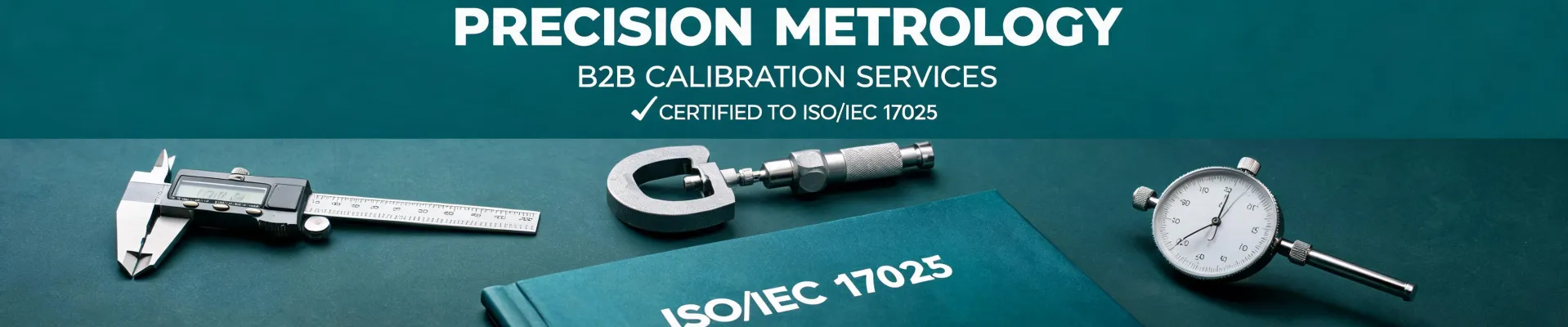
In 2017, I bought a $12.99 digital caliper because it was all I could justify after paying rent. In January 2025, I maintain roughly $2,300 in Starrett precision tools — and a team checklist that has caught 47 potential measurement errors in the past 18 months.
This isn't a flex. It's a warning.
I've been handling tool procurement for a maintenance team for eight years. I've personally made — and documented — 13 significant mistakes, totaling roughly $4,500 in wasted budget. Nine of those trace back to one root cause: trusting a measuring tool that gave me confident, wrong answers.
If you're weighing Starrett against a budget caliper, this comparison is for you. I'm putting them head-to-head on accuracy, durability, trust, and total cost. And yes — there's one round where the cheap tool wins.
Accuracy: the $600 rejection
In my first year (2017), I made the classic specification error: I assumed "calibrated" meant the same thing to every vendor. It doesn't.
We were producing machined brackets — 600 pieces, with a critical flange tolerance of ±0.002 inch. I sampled fifteen brackets with my budget digital caliper. All fifteen read within spec. I signed off on the full batch.
The customer's QC team measured with a Starrett vernier caliper and found a 0.004-inch deviation on that flange — double the tolerance. When your customer's inspector uses a tool they can certify and you used one that drifts, the rejection letter doesn't care which of you is technically right.
The result: $600 in wasted labor, plus a rush reorder that cost us two days of credibility.
Here's what I learned. Many budget calipers rely on low-cost capacitive sensors that drift with temperature, battery state, and wear. On a single check, the error might be 0.001 or 0.002 inch — invisible on your bench, unacceptable on a customer's inspection report. A Starrett vernier caliper is mechanical; its accuracy doesn't depend on a 3-volt battery holding charge. That sounds obvious in hindsight. I had to learn it the expensive way.
If your measurement feeds a tolerance sign-off, the tool is not the place to save money.
Durability: the one-drop test
My first budget caliper survived exactly one drop. It fell from hip height onto a wooden workbench. Not concrete. Wood. The digital readout flickered for a week, then died. The zero point shifted by 0.003 inch. Done.
Counting the two batches I'd already accepted while the display was malfunctioning, that one drop cost us $1,180 including the rush replacement order.
My Starrett caliper took a similar fall in 2022. It survived — dented thumb roller, but still repeating within spec. We sent it out for recalibration and it came back certified. That's a different category of product.
And the Starrett 0-12 micrometer set we bought in 2019? It gets abused daily — dropped, oil-soaked, dragged across the bench by people who treat tools like they're disposable. Six years in, it's still holding tolerance after three routine recalibrations. The initial price hurt. The longevity made up for it.
Trust: the load cell that almost cost me $400
September 2022. Our floor scale started drifting by about 40 pounds at random intervals. The platform would zero fine, then an hour later the reading would be off. It smelled like a dead sensor.
Here's my process when I troubleshoot a Rice Lake load cell (or any strain-gauge sensor):
- Check excitation voltage at the junction box with a 101 multimeter — 9.98 VDC. Within spec.
- Check signal output at zero load — stable.
- Check signal output under a known weight — tracked, then slowly drifted.
Every reading said "replace the load cell." The numbers pointed to a bad sensor, and a replacement Rice Lake load cell would have cost about $400 plus shipping.
My gut said otherwise. The drift pattern seemed too regular — almost tied to where the weight sat on the platform.
So I grabbed my Starrett calipers and measured the mounting geometry under the platform. There it was: a backed-out set screw. The load cell sat at a 2.3-degree angle, causing uneven load distribution. The sensor wasn't broken. The mount was crooked.
Eleven minutes to fix. Zero dollars in parts. And that load cell is still running as of March 2025.
The scary part: if I'd used my old budget caliper to check that gap, the tool's own drift (±0.003 inch) would have swallowed the 0.030-inch misalignment I was hunting for. I would have ordered a working part, then paid an electrician to swap it.
The lesson is embedded in our training notes now: check the mechanical side with a trustworthy mechanical gauge before you blame the sensor. The multimeter tells you what the sensor's electronics are doing. It doesn't tell you the sensor is mounted right.
Total cost: the price tag that lies
Look — I used to buy cheap tools because the price was transparent. $12.99. Done. No hidden fees. But the total cost of a measuring tool isn't the sticker price. It's the sticker price plus:
- the rejected batches because the tool drifted,
- the rush shipping for a replacement when the cheap tool died,
- the $400 sensor you nearly order because your caliper couldn't be trusted,
- the credibility you lose when a customer finds errors you certified.
As of January 2025, a Starrett vernier caliper runs somewhere between $100 and $160, depending on the model. A budget caliper is $12 to $30. On a spreadsheet, that looks like a no-brainer. In the real world, the budget option has cost my team more every single time we've used it on critical work.
When I finally checked out with a $140 Starrett, I spent a week second-guessing myself. What if it was just brand marketing? Then the first calibration certificate came back, and the tool repeated within half a tenth all day. That quieted the doubt.
I'll say it plainly: the vendor who lists all costs upfront — even if the total looks higher at first — usually costs less in the end. Tool prices shift with tariffs and exchange rates, so verify current Starrett pricing at an authorized distributor before you budget. But expect to pay more on day one, and expect to spend less by year three.
Reversal: when I tell people to buy the cheap caliper
Here's the conclusion nobody expects. If your measurement doesn't affect a decision, buy the cheap caliper.
Measuring lumber for a garage shelf? Budget caliper. Checking whether a bolt will clear a bracket with room to spare? Budget caliper. Teaching someone to read a vernier scale for the first time? Hand them a $10 tool and don't stress about it.
I keep a drawer of cheap calipers for exactly these jobs. They're perfect for "good enough" measurements, and I don't lose sleep when someone borrows one and it walks away.
The rule I've drawn for my team: if the measurement feeds a sign-off, a purchase order, a calibration record, or a customer deliverable, it gets done with a certified tool. If it's just "how thick is this shim," the cheap one is fine.
Which one should you buy?
Get the Starrett if you:
- verify tolerances as part of your job,
- sign off on quality or inspection documents,
- diagnose mechanical problems where a hundredth of an inch changes the answer,
- want a tool that survives drops and shop-floor abuse.
Stick with budget if you:
- work on hobby projects,
- need a loaner tool,
- measure things that could be off by 1/32 inch and still work fine.
My specific recommendation: if you work to tolerances under 0.001 inch, invest in a Starrett 0-12 micrometer set. If you sign anything with "inspected by" next to your name, buy the Starrett vernier caliper. If you measure rough stuff to get to "close enough," save your money and buy the budget caliper. Nobody's paying me to tell you this.
Bottom line
I have 13 documented mistakes worth roughly $4,500. Nine trace back to measurement data I couldn't trust. The checklist I maintain has caught 47 potential errors in the past 18 months — which isn't a brag, it's an apology to my 2017 self.
Starrett vs. budget isn't a brand loyalty question. It's one question: what does this measurement cost you if it's wrong?
If the answer is "nothing," buy cheap. If the answer is "a rejected batch," "a wrong diagnosis," or "a failed audit," buy the tool that tells the truth.
That's it.

Marcus Feld
Marcus Feld is an electrical test and measurement analyst specializing in multimeters, oscilloscopes, clamp meters, insulation testers, spectrum analyzers, and data loggers. He applies IEC 61010-2-030 and IEC 61010-031 concepts while examining measurement category, bandwidth, true-RMS response, input loading, and stated uncertainty. His work helps maintenance engineers and test teams choose safe instruments with performance suited to the signals and environments they actually measure.
Leave a Reply