
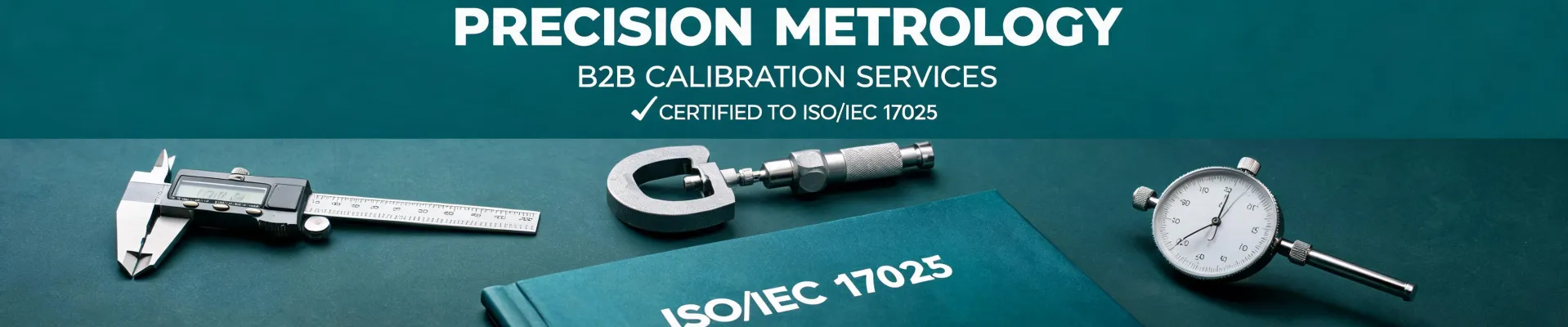
Five minutes of verification beats five days of correction. I wrote that on a sticky note after making one of the most expensive purchasing mistakes of my career. I'm the office administrator for a 400-person manufacturing company. I manage roughly 60–80 orders a year across eight vendors, and I answer to both operations and finance. My job isn't just to buy things; it's to make sure ordering them doesn't create problems later. And that's exactly why I've stopped chasing the lowest price on precision measuring tools.
I know that sounds odd for someone in procurement. But after watching a $25 caliper cause $14,000 in rework, I don't believe price is the best shortcut anymore. I'd rather open the Starrett catalog and choose the right tool for the job than explain to a supervisor why his department's parts came out wrong.
A $14,000 caliper lesson
In 2022, production asked me to buy digital calipers for the floor. I found a twelve-unit set for under $300. They looked legitimate, arrived quickly, and had decent reviews. I thought I'd done a good job. Then the night shift started reporting readings that didn't match. We discovered the calipers drifted by as much as 0.03 mm between readings. By then, a batch of 200 components had already been machined to the wrong dimension. Rework cost us $14,000. The calipers went in the trash.
That was my wake-up call. I realized I didn't have a formal process for verifying vendor quality. We didn't have a checklist, a spec sheet, or a calibration requirement. I just looked at price and reviews. It was the wrong way to buy anything that would affect downstream production.
The Starrett catalog rule
Now, for anything that determines a dimension, I don't impulse-buy. I pull the Starrett catalog and match the exact tool to the application. The Starrett digital micrometer set is my default for outside diameter measurements because the specs are clear: flatness, parallelism, measuring force, and range. That level of detail matters when you're buying for machinists who don't have time to recalibrate a mystery tool.
I used to think a catalog was a waste of paper. I was wrong. A good catalog is a spec reference. It lets me look up tolerances before I talk to a sales rep, so I can make a defensible purchase request. Finance doesn't love vague answers. They do love datasheets and decimal points.
And yes, I've heard the Starrett vs Mitutoyo arguments. I'm not here to endorse one brand as the only option. But I do believe Starrett makes the selection process easier for someone who doesn't live on the shop floor. The detail in their catalog is practical, and the tools I've ordered have held up well.
Why not just buy the cheapest online listing?
Because the lowest listing price is not the actual cost. A $35 caliper that lies to you isn't cheaper than a $140 caliper that doesn't. It's more expensive. The extra $105 is insurance against a failed batch, a missed deadline, or a customer complaint.
That calculation has saved me a lot of arguments with finance. When I ask for $700 for a Starrett digital micrometer set, the cost is easier to justify than the $1,500 tool repair we'd pay later. I can point to the last cheap caliper incident and say, "That's the real price of not checking."
I will admit not every tool in our shop needs to be a premium brand. For a simple depth gauge or a basic ruler, we use whatever works. But when a measurement controls whether a part is acceptable, I do not go cheap. That's not snobbery; it's risk management.
Encoders, flow meters, and sensors follow the same logic
The same lesson applies outside hand tools. Last year, we needed an absolute encoder AFM60A for a positioning axis. I found one listing at 40% below the usual price. The product photo looked right, but the datasheet didn't list the number of multi-turn revolutions or the battery backup behavior. I almost bought it anyway. Then I remembered the caliper lesson and called an authorized distributor instead. The unit cost more, but it came with clear documentation and a warranty. That extra cost was tiny compared to a possible line shutdown.
Flow meters are another example. People ask which brand is best, but the real issue is whether the meter matches the application. You need to check pipe size, fluid compatibility, temperature rating, output signal, and calibration status. A wrong flow meter can silently destroy the accuracy of a process. That's not something you discover after installation—that's something you prevent by reading the datasheet beforehand.
The same goes for sensors. When people ask me where to buy ifm inductive sensors online, I tell them "from an authorized distributor, not the lowest bidder." It sounds obvious, but I've seen a "compatible" sensor become a two-day maintenance problem because someone trusted a generic listing instead of the exact part number. When you're dealing with inductive sensors, a small mismatch in sensing distance or wiring can cause false triggers. And false triggers in production are expensive.
Prevention is a purchasing process, not a personality trait
I didn't become this way because I'm naturally cautious. I became this way because I made a mistake. The third time we ordered the wrong quantity of a component, I finally created a short verification checklist. Now, every order above a certain dollar amount gets the same steps: confirm the exact part number from the manufacturer's catalog, verify the supplier is authorized if the product is critical, check calibration or certification requirements, and keep a record of the datasheet.
That process isn't glamorous, but it works. Since I started using it, we've caught two incorrect specs before they hit the floor. One was a flow meter with the wrong output type. The other was an absolute encoder AFM60A with the wrong connection. Both would have caused downtime. Both were stopped because someone took five minutes to verify.
Final thought: prevention over cure
I know not everyone will agree with me on the brand choice. Some shops get along fine with cheaper tools. But I've seen the downside, and I don't want to repeat it. I'd rather spend ten minutes reading a spec sheet than ten days managing a rework. That's why I choose Starrett for critical measurement tools and why I tell people to apply the same verification logic to encoders, flow meters, and sensors.
Five minutes of verification beats five days of correction. Every time.

Marcus Feld
Marcus Feld is an electrical test and measurement analyst specializing in multimeters, oscilloscopes, clamp meters, insulation testers, spectrum analyzers, and data loggers. He applies IEC 61010-2-030 and IEC 61010-031 concepts while examining measurement category, bandwidth, true-RMS response, input loading, and stated uncertainty. His work helps maintenance engineers and test teams choose safe instruments with performance suited to the signals and environments they actually measure.
Leave a Reply